

Let’s say you woke up with a sharp and severe pain in your jaw. The biggest question that may flash through your mind: Is this just a stressed muscle, or am I having a heart attack?
You don’t want to worry over nothing, but you also don’t want to ignore a serious problem. It can be hard to know what to do.
So, instead of playing the guessing games, you should know when to see a doctor for jaw pain. If your pain is mild, you can wait a few days and see if it gets better. But you should get help if the pain lasts more than a week or gets worse.
For most jaw pain, a dentist is the best person to see first.
In this article, you’ll learn more about when you should see a dentist, when it’s better to consult a doctor, and which emergency signs you should never ignore.
Table of Contents
Why does my jaw hurt?
Jaw pain usually comes from your jaw joint, named the temporomandibular joint (TMJ), chewing muscles, teeth, or nearby nerves. Sometimes, pain starts somewhere else, such as your ears or sinuses, but you feel it in your jaw.
When you’re sure about what is causing the pain, you can decide who to see. With so many possible causes, it can be hard to know what to do next. For more details, see this guide on the reasons for pain in your jaw.
When is jaw pain okay to wait out?
You can usually wait a few days if your jaw pain is mild and slowly getting better. Not every jaw ache means you need to see a dentist or doctor right away.
You can monitor your jaw pain at home when:
- Your pain is mild and gets a little better each day.
- You can open your mouth normally. You can chew and talk without much trouble.
- You do not have swelling, a fever, or a lump.
- Your pain started after something simple. For example, we have seen patients come to Crystal Clear Dental with mild jaw pain after keeping their mouth open for a long dental appointment. Their jaws were moving normally, and they had no swelling or fever.
We checked their jaw and found no signs of a serious problem. We asked them to rest their jaw, eat soft foods, and avoid opening their mouth too wide. With these simple steps, the pain usually gets better. Our guide on how to stop jaw pain immediately can give you some helpful tips.
Many jaw problems are mild and get better on their own. The National Institute of Dental and Craniofacial Research also says that most TMJ disorders are mild and get better with simple care.
However, do not keep waiting if your pain is not getting better. If your jaw pain doesn’t improve within a week, you must see a dentist or another healthcare professional.
When to see a dentist for jaw pain
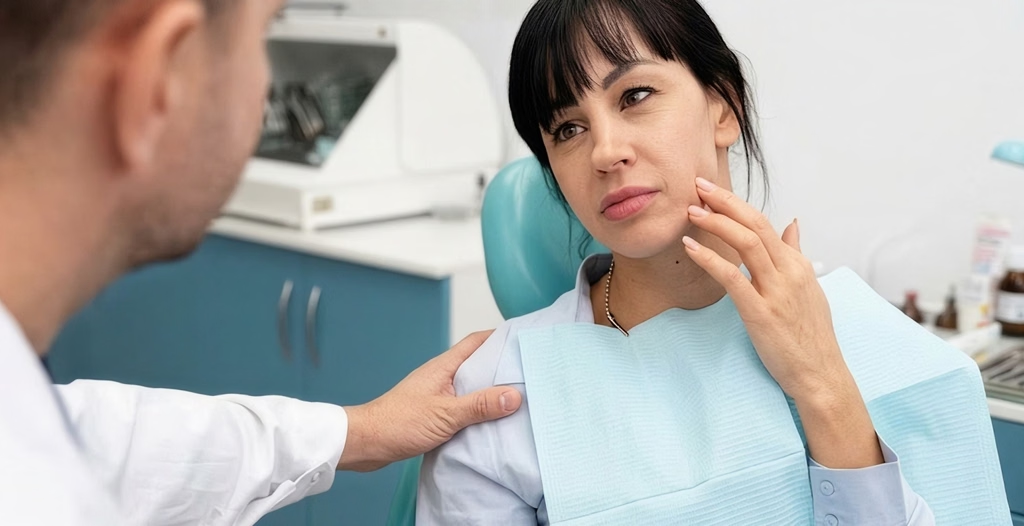
Note it down: you should see a dentist if your jaw pain lasts more than a week, keeps coming back, or comes with dental or temporomandibular joint problems. Your dentist will check your teeth, bite, and jaw joint during the same visit.
Here are the signs that mean you should book a dental visit.
Persistent pain
If your jaw pain lasts more than a week or keeps coming back, book a dental visit without delay. A short period of jaw pain gets better on its own. But pain that does not go away may have some bigger issues that need treatment.
For example, you may have a temporomandibular joint problem or an infection. Find the reason early so you can get treatment sooner and more easily.
Difficulty chewing or speaking
Does it hurt when you chew? Or does your jaw feel tired and sore when you eat? If yes, you should see a dentist.
Pain that gets worse when you chew can come from your jaw joint or a tooth that’s under too much pressure. You should not have to struggle just to eat or talk. So, it’s a must to ask for help when chewing and speaking start to feel difficult.
Swelling or redness
If you notice swelling, redness, or a bad taste around a tooth, you may have an infection.
You should not delay checking it as soon as possible. A dental infection can become worse and may spread to other areas faster than you think. Sometimes, an infection can make both your tooth and jaw hurt at the same time.
This guide on jaw and teeth pain explains more about how these problems are related.
Clicking or popping sounds
A clicking or popping sound from your jaw is not always a problem. If it happens once in a while and does not hurt, you don’t need treatment.
However, you should see a dentist if your jaw is clicking or popping:
- Causes pain
- Happens every time you move your jaw
- Makes your jaw catch or feel stuck
- Comes with other jaw problems
These signs can point to a problem with your temporomandibular joint. Getting it checked early can help you manage the problem more quickly.
Limited jaw movement
You should normally be able to open your mouth wide enough to eat comfortably, such as when you bite into a sandwich.
We have dealt with patients who found it difficult to open their mouth or started feeling stiff when they ate. In such cases, we check how far the jaw can open, how it moves, and whether there is any pain, clicking, or locking.
The treatment depends on what we find. For some patients, simple jaw care and exercises can help. If tight jaw muscles are causing the problem, we may use treatments such as trigger point injections or dental neurotoxins to help relax the muscles.
If the problem comes from the jaw joint, we may recommend TMJ and TMD treatment to manage the problem and improve jaw movement.
Headaches
Frequent headaches can sometimes be related to your jaw, especially if you feel the pain around your temples.
When you clench your jaw, your chewing muscles can become tight and tired. A jaw joint problem can also cause headaches.
You may notice this more after days when you do a lot of chewing. If your headaches happen along with a sore or tired jaw, there may be a connection.
Our guide on headaches and jaw pain explains this connection in more detail. A dentist can also check your jaw and help find out what may be causing the problem.
Teeth grinding
If you wake up with a sore jaw, have worn-down teeth, or notice that your jaw feels tight in the morning, you may be grinding or clenching your teeth when you sleep.
Many people do this without knowing it. At Crystal Clear Dental, we have seen patients come in with morning jaw pain and headaches without realising they were grinding their teeth at night. When we check their teeth and jaw, we spot the problem by looking at signs like worn teeth and tight or sore jaw muscles.
We usually recommend a custom night guard to protect your teeth and reduce some of the pressure on your jaw while you sleep.
When to see a doctor or specialist
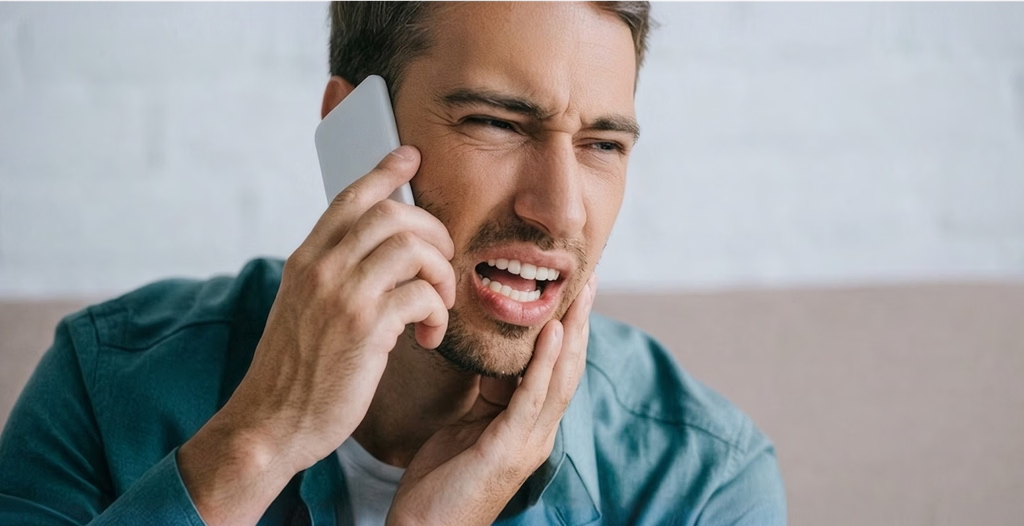
See a doctor if your jaw pain comes from something outside your mouth or comes with warning signs. A dentist can treat most jaw pain, but some causes need medical care instead.
Here are some signs that mean you should see a doctor.
Sinus, ear, or nasal symptoms
If your jaw hurts along with a stuffy nose, pressure in your face, or a blocked or full feeling in your ears, the pain may come from sinuses or ears rather than your teeth.
Your upper teeth are close to your sinuses. Because of this, sinus pressure or congestion can sometimes feel like pain in your teeth or jaw.
An ENT doctor, who treats problems with your ears, nose, and throat, can help if you have these symptoms.
Numbness, tingling, or weakness
If you suddenly notice numbness, tingling, or weakness in your face, see a doctor rather than going to the dentist first.
These symptoms can indicate a problem with a nerve. A doctor can examine you and look for the cause.
If needed, your doctor may refer you to a neurologist, a doctor who specializes in nerve-related conditions.
Pain after a new medication
If your jaw pain started soon after you began taking a new medicine, let your doctor know.
Some medicines have side effects like jaw clenching or muscle tension. This extra muscle tension can make your jaw sore or painful.
Your doctor can review the medicines you take and decide whether one of them is causing the problem. They can also decide whether you should change the medicine.
But hey, don’t stop taking any medication on your own. Always talk to your doctor before making a change.
Fever with spreading swelling
If you have a fever and swelling that seems to be spreading, you may have an infection that is getting worse.
You should get medical care immediately.
If the infection started in a tooth, a dentist can treat the dental problem causing it. However, if the infection is spreading and you also have a fever, you should see a doctor or go to urgent care so the infection can be treated quickly.
When it’s an emergency
Some types of jaw pain need urgent medical care. Call 911 or go to the emergency room if you have:
- Jaw pain along with chest pain, shortness of breath, sweating, or nausea. These can be warning signs of a heart attack.
- A jaw that is locked and will not open or close.
- Severe swelling that makes it difficult to breathe or swallow.
- Jaw pain that starts right after a serious injury or accident.
The American Heart Association lists jaw pain as one of the possible warning signs of a heart attack. Never ignore jaw pain that happens with chest pain or breathing problems.
Here is a simple guide to help you decide who to see:
| Your situation | Who to see |
| Pain when chewing, clicking, grinding teeth, or having tooth or gum problems | Dentist |
| Sinus or ear symptoms, numbness, or jaw pain that started after a new medicine | Doctor or specialist |
| Chest pain, a locked jaw, severe swelling, or a recent serious injury | Emergency room (ER) or call 911 |
How to relieve jaw pain at home
Here are some simple things you can try to get immediate relief from jaw pain.
Rest your jaw
Avoid chewing gum and stay away from hard, crunchy, or chewy foods that make your jaw work harder.
Use a cold or warm compress
So, when to get a cold or a warm pack for jaw pain? Get a cold pack for sharp or sudden pain. And if you have a dull, aching pain, try a warm compress instead. Keep the cold or warm compress on your jaw for 10 to 15 minutes at a time.
Keep your teeth slightly apart
You should not clench your teeth during the day. The teeth should normally be slightly apart when you are not eating or speaking.
Take an over-the-counter pain reliever
If you need one, take it according to the instructions on the label. Do not take more than the recommended amount.
If your jaw pain keeps coming back, you may need to look for the cause rather than only treating the pain each time. Our guide on how to get rid of jaw pain for good covers longer-term ways to manage and reduce jaw pain.
What happens if you leave the jaw pain untreated
Please don’t ignore jaw pain, as it can turn a small problem that’s easy to treat into a bigger problem. Here’s what can happen if you leave your jaw pain untreated:
- Infections can spread. If you have a tooth infection and do not treat it, the infection can get worse. In serious cases, it can spread to other parts of your body.
- Joint problems can get worse. Do not ignore a small TMJ problem, as it can become more serious over time. It can cause ongoing pain, jaw locking, or even long-term damage to the joint.
- Your teeth can wear down. If you keep grinding or clenching your teeth, you can slowly wear them down. Over time, this can weaken your teeth and may cause cracks.
- Your pain can become chronic. Jaw pain and headaches that continue for a long time can be harder to treat than a new problem. Get help early to make it easier to find and treat the cause.
- Eating can become harder. If chewing hurts, you may start avoiding certain foods. Ongoing pain can affect what you eat and make everyday activities less comfortable.
FAQs
Can you go to urgent care for jaw pain instead of the ER?
Yes. Urgent care can be a good option if you have jaw pain with swelling or an infection. However, you should go straight to the ER if you have chest pain or other chest symptoms, a locked jaw, trouble breathing, or a serious injury.
Can your dentist refer you to a doctor if my jaw pain isn’t dental?
Yes. Your dentist can check your teeth, jaw, and mouth, and can tell when your pain may have another cause. If your jaw pain is coming from your sinuses, nerves, or another part of your body, your dentist can refer you to the right doctor or specialist.
What type of specialist treats jaw and TMJ problems?
Many dentists can treat TMJ problems themselves. If you have a more complex problem, you may need to see an oral and maxillofacial surgeon. If your jaw pain is connected to your ears or sinuses, an ENT doctor may be the right specialist.
Can you see a dentist for jaw pain even if you don’t have a toothache?
Absolutely. Your jaw pain does not always come from your teeth. It can also come from your jaw joint or the muscles you use to chew. A dentist can check your bite, jaw joint, and chewing muscles even if your teeth feel completely fine.
Do you need a referral to see a specialist for jaw pain?
Usually, you do not need a referral to see a dentist. You can book a dental appointment directly. However, some medical specialists may require a referral from your doctor, depending on your insurance.
Last thoughts
Hopefully, you’ve got to the answer to your question, “when to see a doctor or jaw pain.”
Most jaw pain is okay to watch for a few days, especially if the pain is mild and slowly getting better. But you should get help if your pain lasts more than a week or keeps coming back.
For most types of jaw pain, a dentist is the best person to see first. If the problem seems to come from somewhere outside your mouth, such as your sinuses, ears, or nerves, you should see a doctor instead.
If your jaw pain is not going away or you are not sure what is causing it, the team at Crystal Clear Dental in San Antonio can help find the cause and help you get comfortable again.