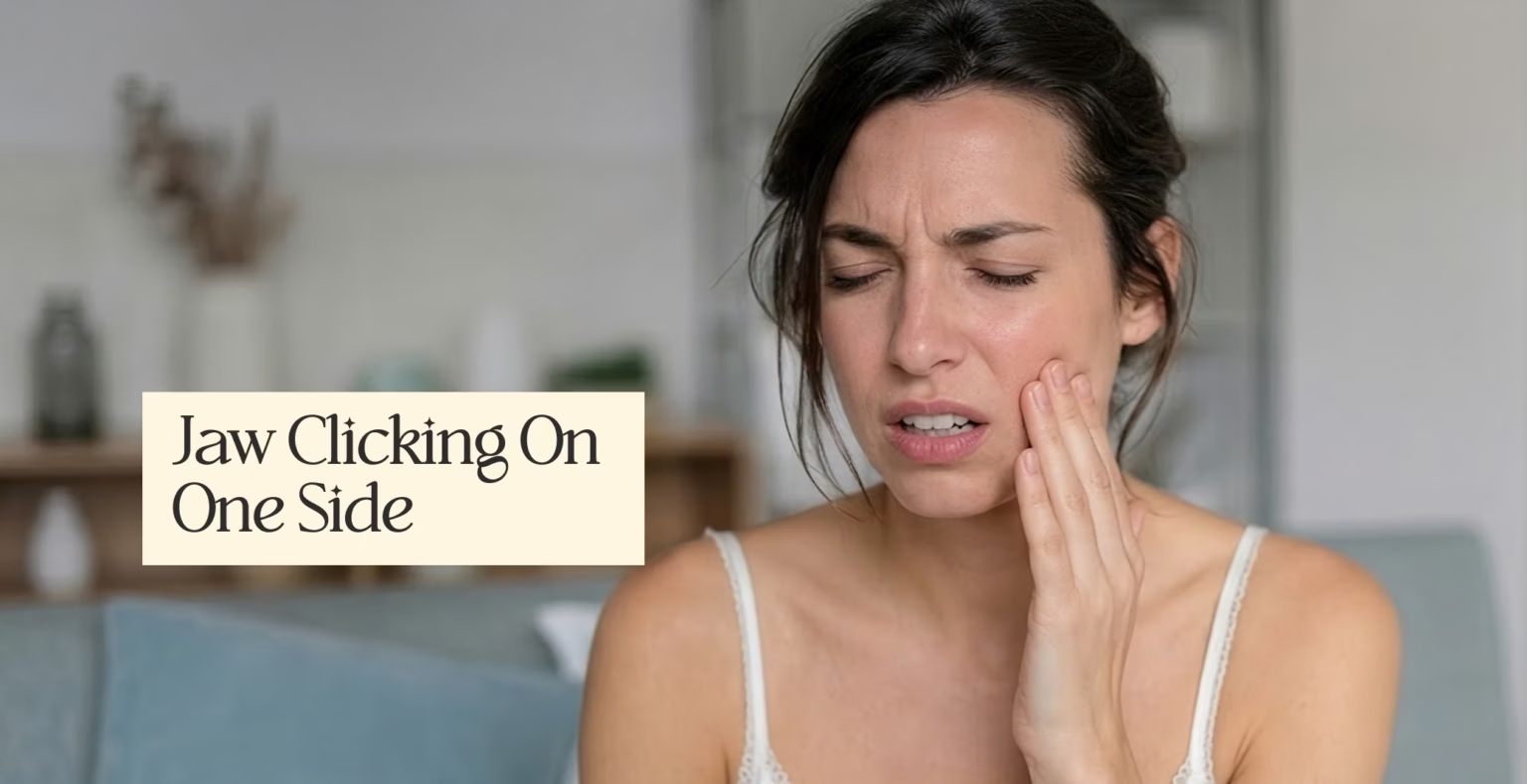
Every time you eat or open your mouth a little too wide, you hear a click. It happens only on one side, and it doesn’t hurt. But your mind may keep wondering if something is wrong, whether it can cause jaw pain in the future, and how you can stop that clicking sound.
So, is jaw clicking on one side without pain normal? The shortest answer is yes, in most cases, it is. If you feel a painless click, it usually means the small disc inside your jaw joint is moving a bit differently as you open and close your mouth.
In this article, you will learn why it happens, how to treat it, and how to prevent it in the long run.
Table of Contents
Is Jaw Clicking or Popping on One Side Without Pain Normal?
Yes, jaw clicking on one side without pain is usually harmless. At Crystal Clear Dental, patients come in worried about a clicking jaw that does not hurt. We check how the jaw moves and ask about other symptoms. If there is no pain, locking, or trouble opening the mouth, we recommend them keeping an eye on the clicking rather than treating the sound itself.
The National Institute of Dental and Craniofacial Research also says that jaw sounds such as clicking or popping do not need treatment when there is no pain.
Here’s why. Your jaw joint is called the temporomandibular joint (TMJ). The joint has a small disc that helps the joint move smoothly. Sometimes, the disc moves a bit out of place. When you open or close your mouth, the jaw catches and then slips back into position. This creates the clicking sound.
So, you don’t have to worry about a click without pain. But see a dentist for jaw pain with clicking. You should do it especially if the clicking happens more often, gets louder, or if your jaw locks or does not open fully.
What are the reasons for Jaw Clicking on One Side Without Pain?
Your two jaw joints work on their own, so they may not move in exactly the same way. Because of this, only one side makes a clicking sound. Here are the most common reasons.
Disc Displacement
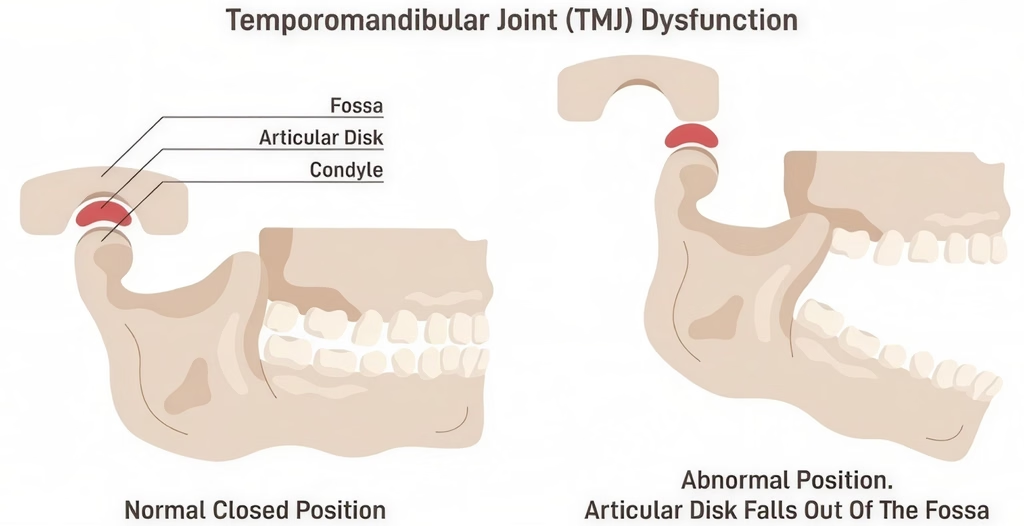
This is the most common reason. A small disc sits between your jawbone and skull. It helps your jaw move smoothly. Sometimes, the disc moves a little out of place. Your jaw then moves over the disc when you open or close your mouth. This creates the click.
Stress and Anxiety
Stress can make you tighten your jaw without noticing. This makes the muscles around your jaw joint tight and can change how your jaw moves. Over time, this can cause clicking on one side.
Try to relax your jaw. Keep your teeth slightly apart and let your tongue rest on the roof of your mouth. This can help reduce the tension and clicking.
Teeth Grinding or Clenching (Bruxism)
When you grind or clench your teeth, you put extra pressure on your temporomandibular joint. This usually happens while you sleep, so you may not know you do it.
Sometimes, we see patients who come in with jaw clicking, morning jaw pain, or headaches without knowing that they grind or clench their teeth at night. We check their teeth and jaw for signs of grinding, worn teeth, or tight and sore jaw muscles.
This extra pressure can make your jaw move unevenly and cause clicking. It can also cause headaches and jaw pain over time. We usually recommend a custom night guard to help protect your jaw while you sleep.
One-Sided Chewing
Do you usually chew on one side? If yes, the side has to do more work than the other. You may do this out of habit or because a tooth on the other side hurts.
Extra pressure can make that side start to click. So, you should try to chew on both sides to spread the pressure more evenly, as we explain in our guide on jaw pain when chewing.
Malocclusion (Misaligned Teeth or an Uneven Bite)
Imagine your teeth do not come together evenly; what will happen? Your jaw moves slightly to one side when you close your mouth. This will add extra pressure on one jaw joint and make it click on that side. If this is your case, get help from a dentist, as he/she can check how your teeth meet and tell you if you need treatment.
Jaw Injury
Remember if you have any past hit, fall, sports injury, or a very wide or forceful yawn. This can change how that one side of your jaw moves.
Maybe you forgot a small injury, but it can still leave that side clicking. However, if you have no pain and can move your jaw normally, the clicking does not cause a serious problem.
How to treat jaw clicking on one side
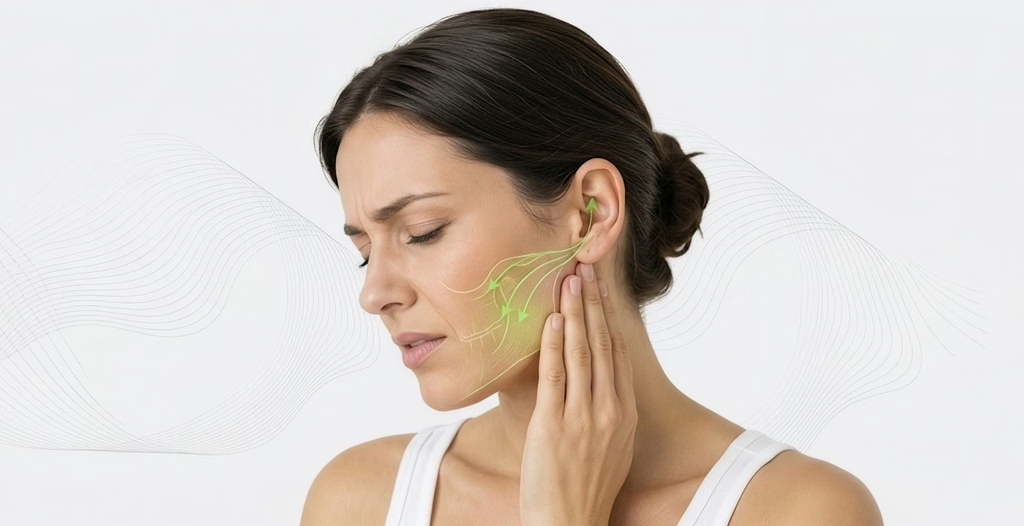
Painless jaw clicking does not need treatment. You can simply manage it with some changes at home. Your main goal should be to relax your jaw and help the joint move smoothly. Please do not try to force the click to stop or keep opening your mouth wide to “test” it.
You can try these steps at home:
Give your jaw some rest
So, how can you give your jaw rest? Do not open your mouth very wide for a while. So, you should avoid very large bites, wide yawns, and biting into thick foods. You should also cut back on hard or chewy foods, such as nuts, chewing gum, tough meat, and hard sweets. Choose softer foods if your jaw feels tired or tight.
Keep your jaw in a relaxed position
Yes, as simple as that. Do not keep your teeth pressed together when you’re not eating. Let your teeth stay slightly apart. Rest your tongue gently on the roof of your mouth. This position can help your jaw muscles relax and reduce extra pressure on the joint.
Try gentle jaw exercises (physical therapy)
Put your tongue on the roof of your mouth. Then, slowly open and close your mouth. But hey, do not force your jaw. Do this a few times. You can also slowly move your jaw from side to side. Keep these movements small and easy. Do not force your jaw to click or try to make it click on purpose. And you must stop if you feel pain, a sharp discomfort, or if your jaw feels like it may lock.
Be careful about stress and clenching
Stress can make your jaw tight, and you may not even realise it. During the daytime, check if you are clenching your teeth. If you notice it, relax your jaw and let your teeth separate. Try some slow, deep breathing to help relax the muscles around your jaw.
Try not to put extra pressure on your jaw
Try not to chew gum for long periods, bite your nails, chew pens, or hold objects between your teeth. These habits make your jaw work more than it needs to.
Chew on both sides of your mouth
If you always chew on one side, try to use both sides when you can. This will help you avoid putting extra pressure on just one temporomandibular joint.
If you feel pain in your jaw, read on how to get rid of jaw pain for good explains different ways to get lasting relief if you develop jaw pain.
If your jaw problems continue or become worse, TMJ and TMD treatment can help you manage the problem and find the right treatment.
How to prevent jaw clicking or jaw popping in the long run
Here are a few tips that will keep your jaw muscles relaxed and prevent jaw clicking or jaw popping in the long run.
- Go easy on chewing gum: Gum keeps your jaw working for a long time. Too much chewing can make your jaw muscles tired and put extra stress on the joint. If your jaw already clicks or feels sore, try cutting back on gum.
- Do not open your mouth too wide: Big yawns and large bites can put your jaw under more pressure. When you yawn, gently hold your chin with your hand to support your jaw. This can help you stop your mouth from opening too far.
- Watch for teeth clenching: When you’re stressed, you clench your teeth without knowing it. Check your jaw during the day. If your teeth touch when you are not eating, relax your jaw and keep your teeth slightly apart. Then, take a few slow, deep breaths to feel better.
- Use a night guard if you grind your teeth: Do you wake up with a sore or tired jaw? You may grind or clench your teeth while you sleep without knowing it. Talk to your dentist; he may give you a night guard to protect your teeth and jaw.
- Fix your posture: Your head, neck, and jaw work together. If you sit with your head pushed forward for hours, your neck and jaw muscles may have to work harder. Try to keep your head over your shoulders, especially when you work at a desk or use your phone.
FAQs
Can painless jaw clicking go away on its own?
Yes. Your jaw may click for some time and then stop. The sound will be gone when you relax your jaw or change habits that put extra pressure on it. If the clicking is mild and does not cause pain, you usually do not need treatment.
Is it bad to pop or click my jaw on purpose?
Yes, try not to do it. When you keep popping your jaw on purpose, you put extra stress on the joint and the muscles around it. Over time, this can make the clicking worse or cause pain and soreness. Let your jaw move naturally instead.
Does painless jaw clicking mean I will need surgery one day?
No. A painless click does not mean you will need surgery. Most people with painless jaw clicking never need an operation. You just need some changes, such as relaxing your jaw and avoiding too much chewing, to get rid of the problem.
Can I still sing or play a wind instrument if my jaw clicks?
Just remember this simple rule: if your jaw clicks but does not hurt, you can usually just keep an eye on it. But if you have pain, your jaw locks, or you have trouble opening your mouth, you should see a dentist.
Why do I notice the clicking more at certain times of the day?
Your jaw may click more when your muscles feel tired or tight. You may notice it in the morning if you clench or grind your teeth while sleeping. You may also notice it later in the day after lots of chewing, talking, or stress.
Can jaw clicking on one side affect my ears or hearing?
The click can sound like it comes from inside your ear because your jaw joint sits very close to your ear. A painless jaw click does not normally damage your hearing. However, if you also feel ear pressure, fullness, pain, ringing, or changes in your hearing, talk to a doctor or dentist so they can check the cause.
Is jaw clicking more common as you get older?
It can be. As you get older, your temporomandibular joint and the small disc inside it can go through normal changes. These changes can make clicking more likely. But a click does not automatically mean something is wrong. If you have no pain and your jaw opens and closes normally, you usually do not need to worry.
Final Words
So, jaw clicking on one side without pain is usually nothing to worry about. A small disc inside your jaw joint moves and causes the click when you open or close your mouth. Stress, teeth grinding, chewing on one side, an uneven bite, or an old injury can also cause it.
The good news is that simple habits and gentle exercises can often help reduce the clicking. If the click does not hurt, you usually do not need treatment.
Just remember one simple rule: a painless click is usually okay to watch, but pain, jaw locking, or trouble opening your mouth means you should see a dentist.
If your jaw starts to hurt or the clicking worries you, the team at Crystal Clear Dental in San Antonio can check your jaw and help you understand what is causing it.