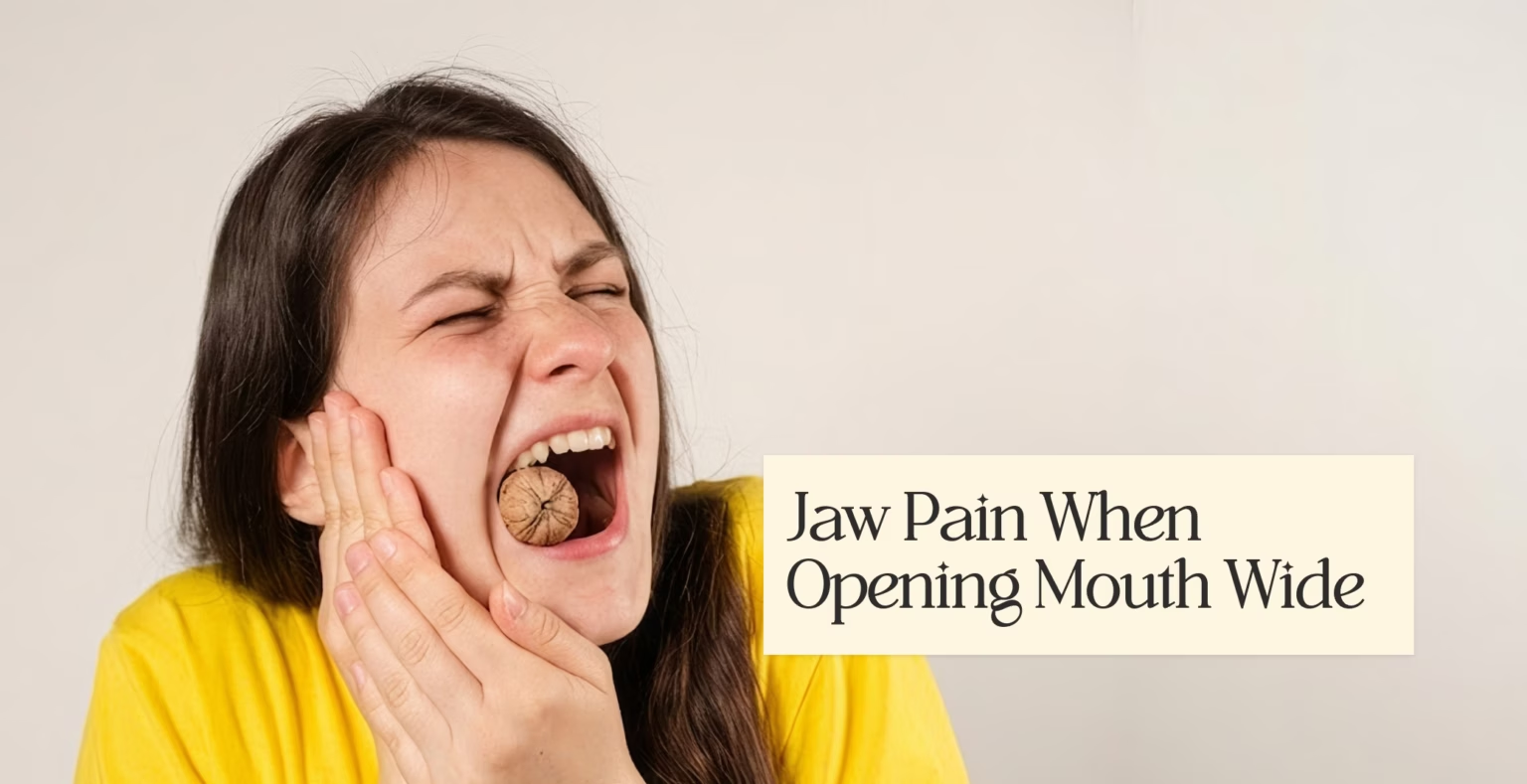
I mean, what’s more frustrating than sitting down to enjoy a favorite meal, only to realize that taking a small bite of a sandwich will give you a sharp jaw pain? Yes, it’s so exhausting to experience this when every yawn feels like a gamble.
So, why does your jaw hurt when you open wide?
When you open your mouth as far as you can, your jaw joint moves to the end of its normal range. This can put extra pressure on the joint and the muscles around it.
Because of this, the pain comes from your jaw joint, called the temporomandibular joint (TMJ), or the muscles around the joint. It’s not always like the pain coming from one particular tooth.
Below, you will learn why your jaw hurts when you open wide, how you can tell if the problem is coming from your jaw joint or muscles, what you can do to feel better, and when you should see a dentist.
Table of Contents
Why Does Opening Your Mouth Wide Hurt?
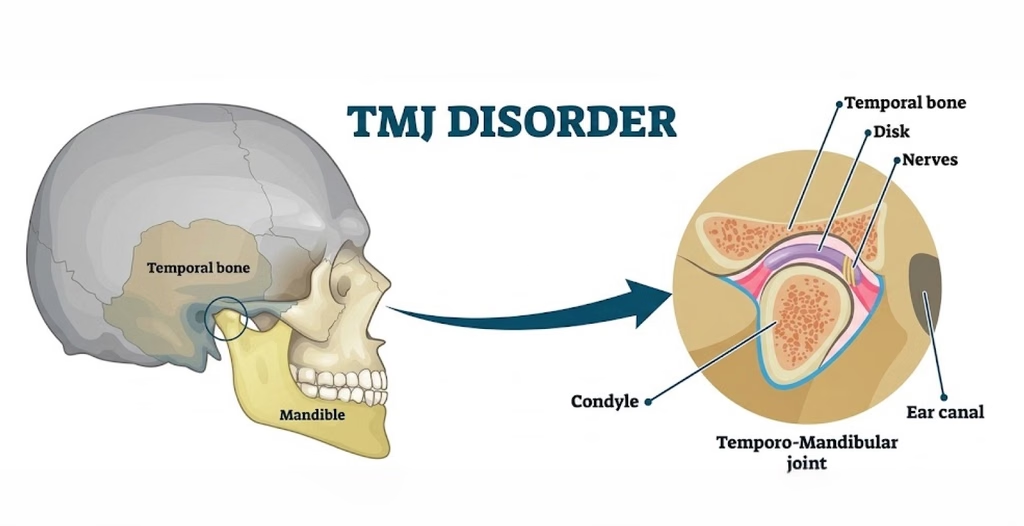
When you open your mouth wide, it can hurt because it pushes your jaw joint to the end of its normal range of motion. When your jaw reaches this point, a small problem in the temporomandibular joint or the surrounding muscles can cause pain.
Here is what happens inside your jaw. There’s a rounded end of your lower jaw, named the condyle. When you open your mouth, the condyle moves forward along the jaw joint. A small cushion called the articular disc should move with it.
If this cushion moves out of its normal position, it is called disc displacement. When this happens, your jaw joint may catch or hurt when you open your mouth as wide as possible. Tight or overworked jaw muscles can also cause pain when you open wide.
Sometimes, opening your mouth too wide can cause a problem by itself. For example, a very big yawn or a hard laugh can stretch a loose jaw joint too much. This is called hypermobility. It can cause your jaw joint to partly slip out of place, called subluxation. Or the joint fully comes out of place, which is called a dislocation.
You’ll feel relieved knowing that temporomandibular disorders (TMDs) are usually not serious. They even get better with simple care.
There are many other possible causes of jaw pain, too. To learn more about what may be causing your pain, see this guide on the reasons for pain in your jaw.
Is It Your Jaw Joint or Your Muscles?
So, jaw pain when you open your mouth wide usually comes from two places: your jaw joint or the muscles around it. Knowing which one is causing your pain will help you understand what’s happening and what to do next.
Joint-Related Pain
If your pain comes from your temporomandibular joint, it feels sharp and focused in one spot. You may feel it right in front of your ear.
At Crystal Clear Dental, we deal with patients who come in with this type of jaw pain. Sometimes, they also face clicking or popping when they open their mouth. This can happen when the small disc in the jaw joint moves out of place and then moves back into place.
This is known as disc displacement with reduction.
When we examine your jaw, we look at how the joint moves and check for signs that the small disc inside the joint is not moving normally.
These signs help us understand what may be causing your pain.
Sometimes, the disc does not move back into place. It can block the joint and make your jaw catch or lock. This is called disc displacement without reduction.
Another possible cause is arthritis, such as osteoarthritis. Arthritis can slowly wear down your jaw joint and cause pain when you move it.
Muscle-Related Pain
If your pain comes from your jaw muscles, it feels more like a tired, tight, or aching feeling.
You may feel it in the chewing muscles on the sides of your face. Two of these muscles are called the masseter and temporalis. Muscle pain can affect both sides of your face.
This type of pain is caused by bruxism (clenching or grinding your teeth). Stress can also make you tighten your jaw muscles, which can make the pain worse.
Sometimes, tight areas in your jaw muscles can form painful spots called myofascial trigger points. These spots can even send pain to other areas of your face or head.
If your jaw pain also gets worse when you bite or eat, this guide on jaw pain when chewing explains how these problems can overlap.
Overview of Treatments for TMJ, Facial Pain and Oral Pain

In most cases, jaw pain when you open your mouth wide gets better with simple treatment. But the right treatment depends on the exact reason for your pain. Here are some treatments your dentist may recommend.
- An occlusal splint or night guard can protect your teeth and give your jaw a chance to rest. This can help if you grind or clench your teeth.
- TMJ and TMD treatment can help if your temporomandibular joint is the problem. You can try some simple jaw exercises, physical therapy, or advice on improving your posture.
- Botox and dental neurotoxins are small injections that can relax jaw muscles that are working too hard. This helps reduce muscle tension and pain.
- Trigger point injections can target tight and painful spots in your jaw muscles. These tight spots can cause pain in your jaw and face.
- Your aim should be to treat the main cause of the pain. For example, your dentist may need to remove problem wisdom teeth or help you manage arthritis if either one is causing your jaw pain.
Jaw Pain on One Side When Opening (and Near the Ear)
If your jaw hurts on only one side when you open your mouth, the problem can be in the joint or muscle on that same side. You may feel the pain close to your ear because your jaw joint is located right in front of your ear.
Because your jaw joint is so close to your ear, a jaw problem can sometimes cause ear symptoms too. You may feel pressure or fullness in your ear, have an earache, or hear ringing in your ear, called tinnitus.
Sometimes, the pain starts in your jaw joint, but you feel it in your ear. This is called referred pain.
The same applies to both sides of your jaw. If the left side hurts, the problem is on the left side. If the right side hurts, the problem is often on the right side.
If you hear a click on one side but do not have any pain, it is usually harmless. You can learn more in this guide about jaw clicking on one side without pain.
When Your Jaw Locks or Won’t Open
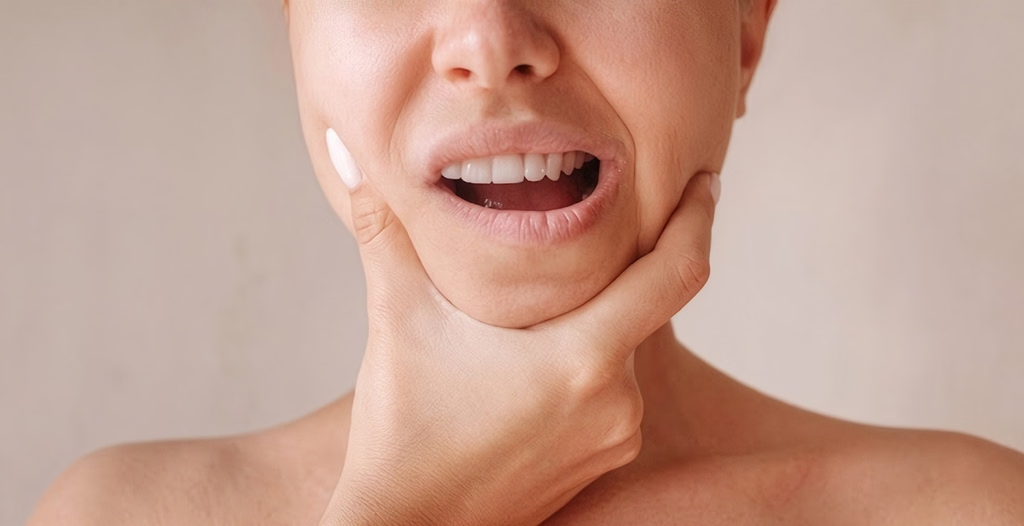
If your jaw locks or you cannot open your mouth fully, do not force your jaw open or closed. Trying to force it can make the problem worse.
There are two main types of jaw locking.
Closed lock
A small disc in your jaw joint moves out of place and blocks the joint. Because of this, you cannot open your mouth fully.
Open lock
Your jaw gets stuck open, and you cannot close your mouth. This can happen if you open your mouth too wide, such as during a big yawn, and your jaw joint slips out of place.
At Crystal Clear Dental, we see patients who come in because their jaw feels stuck open or they cannot close their mouth normally. This condition is called trismus. Our team checks the position of the jaw, what triggered the problem, and whether the joint or muscles are causing the issue.
Do not try to force your jaw back into place yourself, as this can make the problem worse.
If your jaw is truly stuck open or locked shut, you should get help immediately. If you need some time to see a dentist, gentle warmth and a light massage may help relax your jaw muscles for some time. Do not try to force your jaw back into place.
How to Relieve Jaw Pain When Opening Wide

Here are some small changes that can give your jaw joint and muscles time to relax and heal.
Do:
- Eat soft foods. Try foods like soup, eggs, and pasta. These foods are easier to chew and put less stress on your jaw.
- Use ice or warmth. Try an ice pack or a warm compress for short periods. Use whichever feels better for your pain.
- Gently massage your jaw muscles. Use your fingers to gently massage the sore muscles on the sides of your face.
- Take an over-the-counter pain reliever. If you need one, follow the instructions on the label.
- Relax your jaw. Keep your teeth slightly apart when you are not eating. Let your tongue rest gently against the roof of your mouth.
Don’t:
- Do not open your mouth too wide when you yawn. Try to support your chin gently with your hand.
- Do not chew gum or bite your nails. These habits make your jaw muscles work harder.
- Do not bite hard foods with your front teeth. This can put extra pressure on your jaw.
- Do not clench your teeth during the day. Try to notice when you are clenching and let your jaw relax.
For a full step-by-step routine, see this guide on how to stop jaw pain immediately.
When to see a dentist
See a dentist if your jaw pain when you open your mouth wide lasts more than a week or two or keeps getting worse.
You should contact a dentist if you notice:
- Your jaw locks. You may not be able to open or close your mouth normally.
- You can not eat or drink comfortably. Pain or limited jaw movement makes it difficult to eat or drink comfortably.
- You have severe or frequent headaches. Headaches that happen often or feel severe can sometimes be linked to jaw problems.
- You have swelling and a fever. This can be a sign of an infection that you should immediately treat.
- You have vision changes or pain when you touch your scalp or temple. These symptoms may need urgent medical care, so do not ignore them.
There is one warning sign you should take especially seriously: jaw pain with chest pain, shortness of breath, or nausea can be a sign of a heart attack. Call 911 without delay.
For more information about when jaw pain needs medical attention, read this guide on when to see a doctor for jaw pain.
FAQs
Why does yawning hurt more than talking?
You open your mouth much wider when you yawn. This puts more pressure on your jaw joint. If your jaw disc is out of place or your muscles are tight, you may feel pain.
Should you keep testing your jaw?
No. Testing how wide you can open your mouth again and again can irritate your jaw and make the pain worse. Open your mouth gently and stop when it feels uncomfortable. Do not force it open wider.
Why does my jaw shift when I open it?
Your jaw may move to one side because the two sides of your jaw joint are not moving evenly. This can happen with TMJ problems. If it happens often, ask your dentist to check it.
Can a dental visit cause jaw pain?
Yes. Keeping your mouth open for a long time can strain your jaw joint and muscles. Your jaw may feel sore for a day or two. Rest usually helps it feel better.
Can stress make it worse?
Yes. Stress can make you clench your teeth and tighten your jaw muscles. This can make it harder to open your mouth and can increase the pain. Relax your jaw and reduce stress to feel better.
Will it go away on its own?
Sometimes, yes. Mild pain from tired or strained muscles may get better within a week or two. Rest and soft foods can help. If the pain stays or gets worse, see a dentist.
Is jaw clicking always a problem?
No. A click without pain is often harmless and may not need treatment. But clicking with pain, catching, or locking can point to a problem with the jaw disc. A dentist can check it for you.
Conclusion
Thanks for being with us till the end. Jaw pain when you open your mouth wide usually comes from your jaw joint or the muscles around it. When you open wide, your jaw joint moves as far as it can.
If the joint has a slipped disc, your muscles are tight, or your jaw stretches too far, you may feel pain. A click, lock, or the way the pain feels can also give you clues about the cause.
The best part is, you can feel better with simple care. Resting your jaw, eating soft foods, and avoiding habits that put extra pressure on your jaw can help. But if your jaw locks, you cannot open your mouth, or you have other warning signs, you should get help quickly.