Eating should be easy, not painful. But if your jaw hurts every time you chew, even a simple meal can become difficult. You might find yourself chewing on one side, avoiding certain foods, or expecting pain with every bite.
So why does your jaw hurt when you chew? Every time you bite down, you put pressure on your jaw joint, your chewing muscles, and your teeth. If there’s a problem with any of them, chewing can cause pain.
Below, you’ll find a quick self-check to help you figure out the possible cause, the most common reasons your jaw hurts when chewing, simple ways to get relief, and signs that mean you should see a dentist.
Table of Contents
Why Does Your Jaw Hurt When You Chew? A Quick Self-Check
Not all jaw pain feels the same. Where you feel the pain, when it happens, and what it feels like can give you helpful clues about what’s causing it.
When we see patients with jaw pain, we look at where the pain starts and what makes it worse. We also check your teeth, jaw movement, and the muscles around your jaw. This helps us narrow down what may be causing the pain.
Here’s a quick guide to identify the causes:
| What you feel | Most likely cause |
| Sharp pain when you bite down or release your bite | You may have a cracked tooth |
| Pain or clicking near your ear that gets worse the longer you chew | It can be a jaw joint (TMJ) problem |
| A tired or sore jaw on both sides, especially in the morning | You may be grinding your teeth while you sleep |
| Severe pain around one tooth with swelling | You may have a cavity or a tooth infection |
| Pain that started after dental work | Your filling or crown may be too high |
You can also try these three simple checks at home:
- Bite test: It’s a fun test where you need to gently bite a soft cotton ball. If one spot hurts, you know that tooth may be causing the pain.
- Tap test: Lightly tap each tooth with a clean finger. If one tooth hurts more than the others, maybe that one is causing the pain.
- Movement test: Slowly open your mouth wide and move your jaw from side to side. If you feel pain or hear clicking near your ear, your jaw joint may be the cause.
Common Causes of Jaw Pain When Chewing
Most jaw pain while chewing comes from your jaw joint, chewing muscles, or teeth. Here are the most common causes. If you want to learn about jaw pain in general, have a look at the reasons for pain in your jaw.
TMJ Disorder
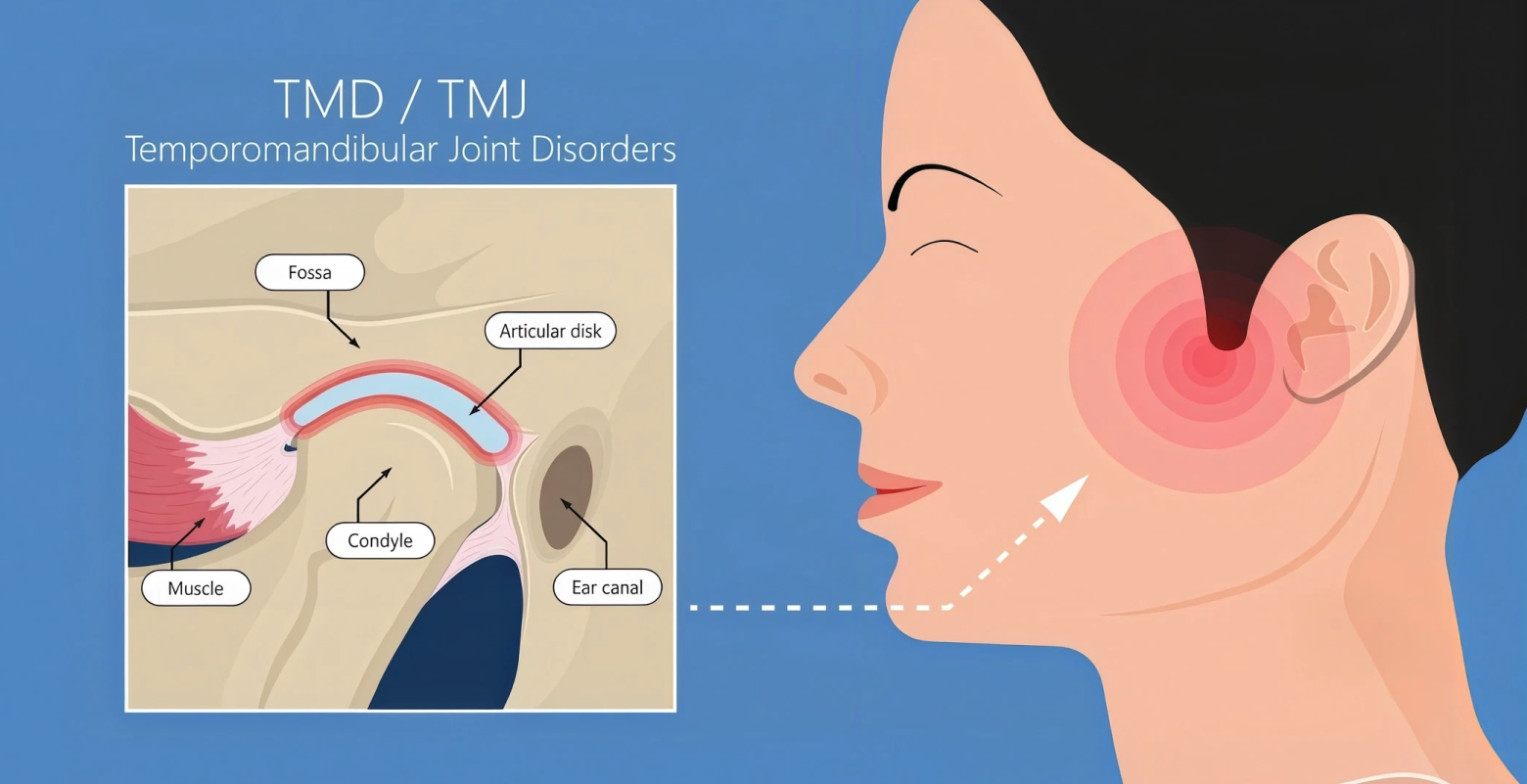
Your temporomandibular joint (TMJ) is the hinge just in front of each ear. You use it every time you chew. If the joint or the muscles around it become irritated or strained, chewing can make the pain worse.
You may feel a dull pain near your ear. You may also hear clicking or popping when you move your jaw. The pain may get worse the longer you chew. Stress, teeth grinding, and bite problems can all cause this.
Teeth Grinding and Clenching (Bruxism)
If you grind or clench your teeth, your jaw muscles have to work too hard. You may do this while you sleep without knowing it.
When you wake up, your jaw may feel sore or tight. Your teeth may also hurt when you chew. A custom night guard can help protect your teeth and take some pressure off your jaw.
A Cracked or Damaged Tooth
A cracked tooth can hurt when you chew. You may feel a sharp pain when you bite down or when you stop biting. We’ve heard our patients say that pain from a cracked tooth often comes and goes. This makes it hard to spot.
Many cracks are too small to see. If the same spot hurts every time you chew, a cracked tooth could be the reason. We carefully check the tooth and how it reacts when you bite to see if a crack may be causing the pain.
Tooth Decay or an Abscess
A deep cavity or tooth infection can make chewing painful. When you bite down, you put pressure on the damaged tooth, which can cause pain in your jaw.
A tooth abscess is an infection around a tooth. It can cause severe pain, swelling, or a bad taste in your mouth. It will not go away on its own, so you should see a dentist as soon as possible.
A “High” Filling or Crown (Bite Problem)
If your jaw started hurting after you got a filling or crown, the filling or crown may be a little too high.
This means it hits first when you bite, putting extra pressure on that tooth and your jaw. The good news is that your dentist can usually fix it with a simple adjustment. Learn more in a guide on jaw pain after a filling.
Wisdom Teeth
Your wisdom teeth are the last teeth at the back of your mouth. If there is not enough room for them to grow, they may push against your other teeth or gums.
This can cause pain and swelling that gets worse when you chew because chewing adds pressure to the area. The pain is usually at the back of your mouth and often on one side.
When we check pain in this area, we look at the wisdom tooth and the gum around it. We check for swelling and signs that the tooth may not have enough room to grow properly. It helps us understand if the wisdom tooth is causing the pain.
A full guide on whether wisdom teeth can cause jaw pain explains more about it.
Sinus Pressure (Upper Back Teeth)
Your upper back teeth are close to your sinuses. If you have a cold or sinus infection, swollen sinuses can press on the roots of these teeth. When you chew, the extra pressure can make your upper teeth and jaw hurt.
You will usually have other symptoms too, such as a blocked nose or pressure around your face. The pain usually goes away once your sinuses recover.
How to Fix Jaw Pain When Chewing (Right Now)
You can feel better by giving your jaw some rest. Simple things like eating soft foods and using a warm or cold pack can help.
Here are a few things you can try:
- Eat soft foods like soup, yoghurt, mashed potatoes, scrambled eggs, oatmeal, or smoothies for a day or two. They are easier to chew and put less pressure on your jaw.
- Chew on the side that doesn’t hurt. This gives the sore side of your jaw a chance to rest.
- Avoid hard, crunchy, chewy, or sticky foods like nuts, chewing gum, and crusty bread. They can make your jaw hurt more.
- Use a warm or cold compress for 10 to 15 minutes. A cold pack can help with swelling and pain. A warm pack can help relax your jaw muscles.
- Take an over-the-counter pain reliever if you need one. But before taking any medication, always follow the instructions on the label.
- Rest your jaw. Try not to open your mouth too wide, yawn widely, or clench your teeth while your jaw hurts.
For a full step-by-step routine, see this guide on how to stop jaw pain immediately. Home care can help if the pain is mild, but if it lasts more than a day or two, gets worse, or keeps coming back, you should see a dentist.
When to Be Concerned with Jaw Pain
You should see a dentist if your jaw pain lasts longer than a day or two, keeps coming back, or gets worse instead of better. While many causes of jaw pain are easy to treat, finding the problem early can help prevent more serious issues.
Make a dental appointment if you notice:
- Pain that lasts more than one or two days or keeps returning.
- Swelling, a bad taste in your mouth, or a fever. These may mean you have a tooth infection or abscess. You should see a dentist soon.
- A sharp pain in the same spot every time you bite. You may have a cracked or damaged tooth.
- Clicking, locking, or difficulty opening your mouth. You may have a jaw joint (TMJ) problem.
Your dentist can check your teeth and jaw to find what is causing the pain. Depending on the problem, they may fix a damaged tooth, adjust a filling or crown, treat an infection, or suggest TMJ and TMD treatment for your jaw joint.
If jaw pain makes it hard for you to eat, a dentist can help you find the right treatment.
Some symptoms need immediate medical care. Get urgent help if:
- Your jaw suddenly locks, and you can’t open or close your mouth.
- You have severe swelling, especially if it comes with a fever or makes it hard to swallow or breathe.
- Your jaw pain starts after a serious injury.
- Your jaw pain happens with chest pain, shortness of breath, nausea, or sweating. Call 911 right away, as these can be signs of a medical emergency.
For more information about warning signs, read when to see a doctor for jaw pain.
FAQs
Can chewing gum too often cause jaw pain?
Yes. If you chew gum for a long time every day, your jaw muscles can become overworked, just like any other muscle. This can leave your jaw feeling tired, sore, or painful when you eat. Chewing less gum usually helps.
Why does your jaw hurt only when you chew?
If your jaw only hurts when you chew, the pain may be caused by pressure. A cracked tooth, a jaw joint (TMJ) problem, or sore jaw muscles may feel fine when you rest but hurt when you chew.
Why Is It Hard to Chew with Jaw Pain?
When inflammation or muscle strain affects the TMJ, it becomes hard to chew with jaw pain because the joint cannot move smoothly. This creates tenderness, fatigue, or sharp pain when biting down or opening the mouth.
Why does your jaw feel tired after a long meal?
Your jaw muscles work every time you chew. Long meals or hard, chewy foods can make your jaw muscles tired and sore. The pain often gets better after you rest your jaw.
Can jaw pain when chewing go away on its own?
Sometimes. If you have used your jaw too much or strained the muscles, the pain may get better after a few days of rest and soft foods.
Can TMJ Treatment Help Improve Chewing Discomfort?
Yes. TMJ treatment can reduce pain, relax your jaw muscles, and help your jaw move better. Over time, this can make chewing easier and more comfortable.
Conclusion
Jaw pain when you chew can come from your jaw joint, jaw muscles, or teeth. Where you feel the pain can give you a clue about the cause.
For example, a cracked tooth may cause sharp pain when you bite. A TMJ problem may cause pain near your ear. Sore jaw muscles may cause pain on both sides of your jaw.
The good news is that most causes can be treated. But if your pain lasts for more than a few days, keeps coming back, or comes with swelling or a fever, you should see a dentist.
If chewing is becoming painful or stopping you from enjoying your meals, the team at Crystal Clear Dental in San Antonio can find the cause and help you get lasting relief.