
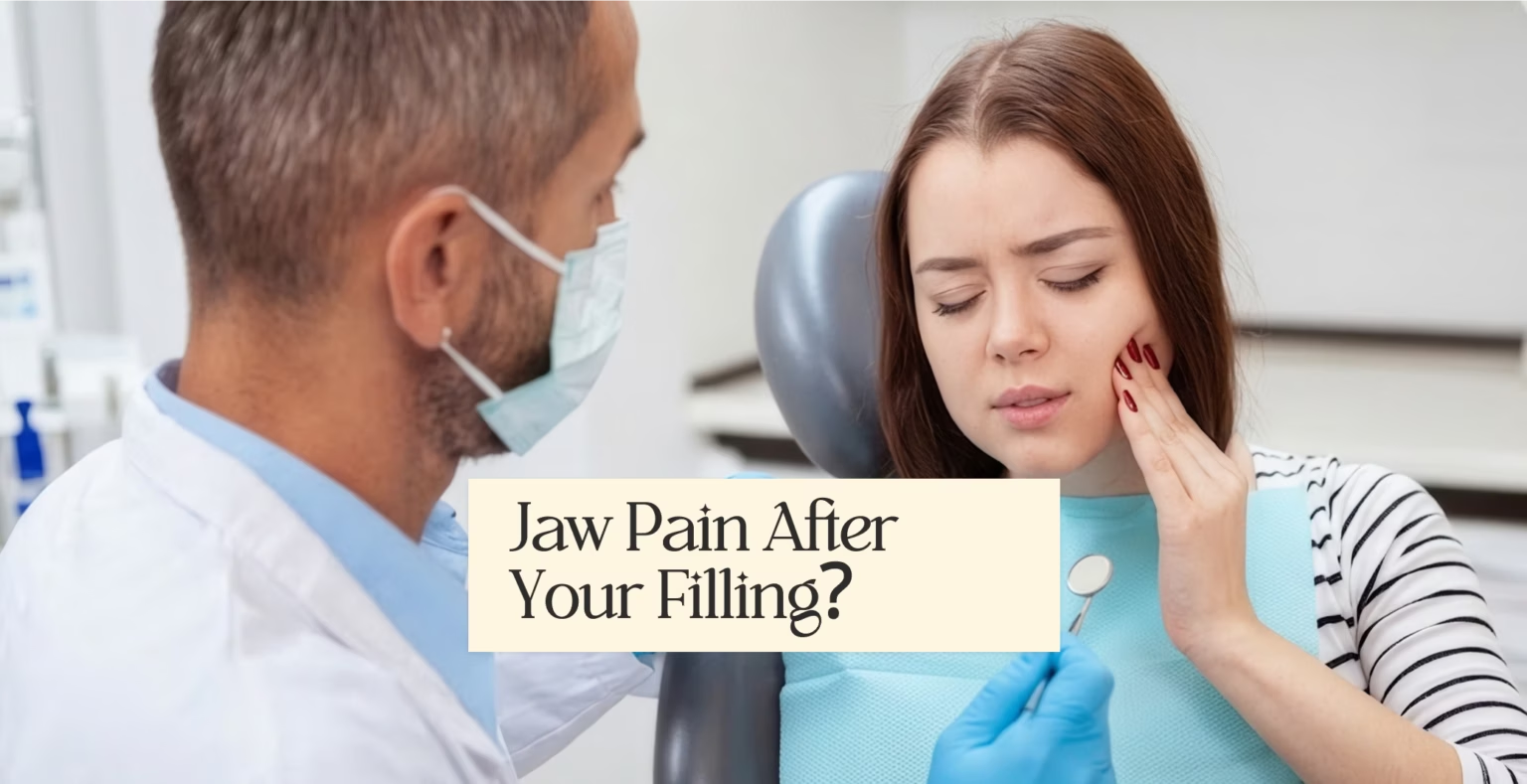
You went for a filling, but now your jaw hurts. So, you actually expected your tooth to feel better, but you’re experiencing the opposite. This must be frustrating; we get it. You may feel jaw pain when you bite down, or the ache may spread toward your ear.
So, is jaw pain after a filling normal? And how long does it last?
Yes, mild jaw pain after a filling is common. It usually happens because you have to keep your mouth open during the procedure. The pain or soreness will go away within a few days. You just need to watch for the pain to get a little better each day.
In this article, you will learn how long the pain should last, why it happens, what you can do to feel better, and when you should call your dentist.
Table of Contents
Is jaw pain after a filling normal?
Yes, mild jaw pain after a filling is normal and very common. Your jaw has to stay open during the session, so it may feel sore afterward. Your treated tooth may also need some time to settle.
At Crystal Clear Dental, we sometimes see patients come back after a filling because their jaw feels sore or tired. We check the tooth, their bite, and how their jaw moves to make sure nothing else is causing the pain.
You may also have some sensitivity to hot, cold, or pressure when you bite. WebMD also says tooth sensitivity after a filling is common and usually goes away within a few weeks. If it does not get better within two to four weeks, then you should see a dentist.
So, there’s nothing to worry about. But you should know which symptoms are normal and which ones need a dentist’s help. We will explain that next.
How long should jaw pain after a filling last?
Most jaw pain after a filling goes away within 24 to 72 hours. Your jaw may feel sore at first, but it should slowly start to feel better.
Here’s what you can usually expect:
| Time after filling | What you may feel |
| First 24–72 hours | You may feel mild jaw soreness or stiffness |
| Days 4–7 | Less pain, but you may still feel some pain when biting |
| 1–2 weeks | You should have little or no pain left. |
| More than 2 weeks | This is not typical. It’s time to call your dentist. |
Why does your jaw hurt after a filling?
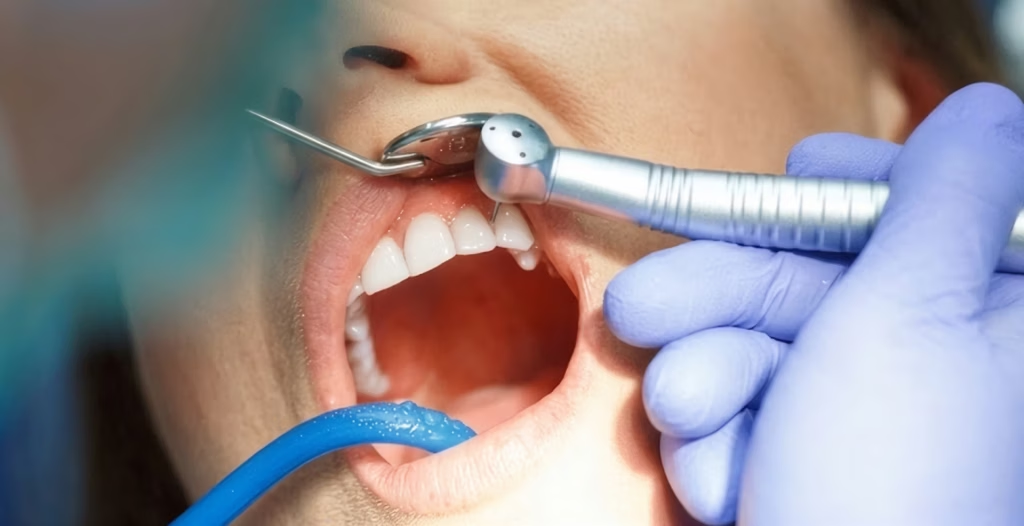
Here are the most common causes of jaw pain after a filling.
Holding your mouth open
This is the most common reason. Since you have to keep your mouth open during the filling, it can make your jaw muscles and joints tired and sore.
You may feel the soreness on one or both sides of your jaw. Longer dental visits can make you feel worse. If you have a smaller mouth and keep it open for a long session, it can be harder.
Your filling is too high
Does your tooth hurt when you bite down? Your filling may be a little too high.
Even a small difference can make your teeth meet the wrong way. This can put extra pressure on your tooth and jaw. You may not notice it during the appointment because your mouth is numb.
The good news is that your dentist can usually fix it quickly by smoothing the filling.
If your pain gets worse when you chew, this may be the main reason. You’ll get to know more about it in our guide to jaw pain when chewing.
The anesthetic injection
The numbing shot can also make your jaw sore. The needle may irritate or bruise the tissue or a nearby muscle. You may feel some soreness for a day or two. It may spread to your jaw, but it usually goes away on its own. You don’t need treatment for this.
A deep filling near the nerve
If your filling is deep, it may be close to the tooth’s nerve. This can irritate the nerve and cause pulpitis.
Some pain or sensitivity after a deep filling is normal. When we check a tooth after treatment, we look at how the pain behaves. Mild sensitivity that slowly improves is usually not a major concern.
You may have some mild pain at first, and it usually gets better within a few weeks. But watch out for severe pain or pain that keeps you awake at night. These can mean the nerve is badly irritated or damaged.
If that happens, you may need a root canal to fix the problem.
In that case, you may need a root canal.
An existing TMJ problem
If you already have a temporomandibular joint (TMJ) problem, a tooth filling can make it worse for a while.
When you keep your mouth open for a long time, it naturally puts extra stress on your jaw joint. This can make your usual pain flare up.
The filling itself may not be the problem. The dental work may simply trigger your existing jaw problem. If this keeps happening after dental visits, TMJ and TMD treatment may help.
Tension or clenching during the appointment
Do you get nervous at the dentist? If yes, you may clench your jaw without noticing.
When you keep your jaw tight during the whole appointment, your muscles can become tired and sore. It is similar to using any muscle too much.
Try to keep your jaw relaxed during future appointments. This will help prevent soreness.
Trismus
Trismus, sometimes called “lockjaw,” means you cannot open your mouth fully because your jaw muscles are tight or in spasm.
You can experience it after dental work. When we check a patient with limited jaw movement, we see how wide they can open their mouth and check if the jaw muscles are tight or sore. We also look for signs of a jaw joint problem.
Trismus usually gets better within about two weeks. Rest, soft foods, moist heat, and gentle stretching will help you overcome this soon.
An uneven filling
You may have an uneven filling instead of it simply being too high. A rough edge can bother your tongue or gums. It can also change the way your teeth meet. This can make your jaw feel sore when it adjusts.
Your dentist can usually smooth or reshape the filling quickly.
You had several fillings
If you had several fillings in one visit, your jaw had to stay open for longer. Your teeth also have more new filling surfaces to adjust to.
Because of this, your jaw may feel more sore than it would after just one filling. And you don’t have to worry about this one. This extra soreness is usually normal and should get better within a few days.
Where Does It Hurt? Ear, Cheek, Gum, and Neck Pain

After a filling, you may feel pain in places other than the tooth you had treated. It happens because your jaw, teeth, and nerves are all connected. Sometimes, the pain starts in one area, but you feel it somewhere else. That kind of pain is called referred pain.
Here is what the pain in different areas may mean.
Ear
Pain near your ear can come from your jaw joint or a back tooth that sits close to your ear.
Cheek
Your cheek may feel sore because of the numbing injection or because your jaw muscles worked hard during the filling.
Gum
If your gum feels sore, the area around the filling may be irritated. This is usually mild and gets better as the area heals.
Neck
Your jaw and neck muscles work together. If your jaw stays open for a long time during the filling, these muscles can become tight and sore. You may then feel the pain in your neck, too.
Opposite side of your jaw
You may chew more on the other side because your filled tooth feels strange or sensitive. Using that side more than usual can make it sore.
Tooth and jaw together
Your teeth and jaw share some of the same nerves. Because of this, it’s hard to tell exactly where the pain is coming from. You can learn more about it in our guide to jaw and teeth pain.
Headache
Tight or tired jaw muscles can also cause a headache. This is more common if you clench your jaw because of stress or discomfort. A full guide on headaches and jaw pain will let you know more about them.
If your pain does not seem connected to your filling at all, there may be another reason for it. Our guide to the reasons for pain in your jaw will tell you the possible causes.
How to Relieve Jaw Pain After a Filling
These steps will help you calm the soreness while your jaw heals.
Eat soft foods
Eat foods that are easy to chew for a day or two. Try to chew on the other side of your mouth if your filled tooth feels sore.
Use a warm or cold compress
If you have swelling, use a cold pack on the outside of your jaw. If your jaw muscles feel sore or tight, moist heat can help you. Use it for around 10 to 15 minutes at a time.
Do some exercises to ease jaw tension
There are some easy exercises you can follow to ease jaw tension and relieve pain. For example:
- Slow opening: Open your mouth slowly and hold it for 5 seconds. Then, close it gently and repeat the process 5 times.
- Side-to-side movement: Slowly move your jaw to one side, then the other. Hold each side of your jaw for a few seconds. This will help your jaw move more easily.
- Softball exercise: This one is interesting. You have to take a soft rubber ball and bite it gently. Hold for a few seconds, then relax, and repeat 5 times.
- Chin exercise: Place your palm under your chin. Then, gently push up with your hand when your jaw pushes down. Hold for 10 seconds and then relax.
Here’s a full step-by-step routine for you to stop jaw pain immediately. These tips will ease pain, but they don’t fix a high filling. So, you should see a dentist if biting still hurts.
When to Call Your Dentist
Please consult your dentist if your jaw pain gets worse, lasts more than two weeks, or comes with other warning signs. Here’s when you must call your dentist.
- Pain that gets worse: Your pain should slowly improve after a filling. If it keeps getting stronger instead, call your dentist.
- Sharp pain when you bite: This can mean your filling is too high. Your dentist can usually fix this by adjusting the filling.
- Severe pain or pain at night: If your tooth throbs or the pain wakes you up, the tooth nerve may be irritated or damaged. You may need further treatment.
- Swelling, a bad taste, or fever: These signs can point to an infection. Contact your dentist as soon as possible if you have them.
- Trouble opening your mouth: Some jaw stiffness can happen after a filling. But if you still cannot open your mouth properly or it does not get better, you should get it checked.
Sometimes, the solution is very simple. For example, your dentist can adjust a high or uneven filling. It may give you quick relief.
If the tooth nerve is causing the pain, you may need more treatment. The team at Crystal Clear Dental in San Antonio can check your bite, examine your tooth, and find the cause of your pain.
For more information about warning signs and when you need help, see our guide on when to see a doctor for jaw pain.
FAQs
Can a filling change how your bite feels even if it doesn’t hurt?
Yes. A new filling can make your bite feel a little different at first. This usually feels normal again within a few days. If your bite still feels strange after a week, tell your dentist.
Can grinding cause jaw pain after a filling?
Yes. A new filling may feel different, so you may clench or grind your teeth more, especially at night. This can make your jaw muscles tired and sore.
Why does your jaw hurt more at night?
You may clench your teeth more at night because your bite feels different after the filling. This can make your jaw muscles sore. You may notice the pain more when you lie down or wake up with a sore jaw.
Is it safe to take pain medicine for a few days?
Usually, yes. You can use an over-the-counter pain reliever for a short time if you follow the instructions on the label. If you still need pain medicine after a few days, call your dentist.
Can a lost filling cause jaw pain?
Yes. If your filling falls out, the tooth may become sensitive or painful. You may also chew differently to protect the tooth. This can put extra stress on your jaw. See your dentist soon if your filling falls out.
Can jaw pain after a filling cause long-term TMJ problems?
Usually, no. Most jaw pain after a filling goes away in a short time. But if you already have jaw problems or your pain lasts for weeks, ask your dentist to check your jaw and look for a TMJ problem.
Conclusion
Jaw pain after a filling is usually normal. Your jaw may hurt because you had to keep your mouth open for a long time. Your tooth may also need some time to adjust, or your filling may be a little too high. Most soreness gets better each day and goes away within one to two weeks.
Here’s one simple rule to remember: if the pain gets better, that’s a good sign. If it gets worse, call your dentist. If you feel sharp pain when you bite, pain that wakes you up at night, or swelling, don’t delay seeing a dentist.
Most problems are easy to fix. For example, your dentist can quickly adjust a filling if it is too high.
If your jaw pain does not go away or you are worried about it, the team at Crystal Clear Dental in San Antonio can check your bite, find the cause, and help you feel better.