Do you know that one in three American adults is unhappy with their smile? If your smile has also been a concern for you, relax! You are not alone! The good news is that modern cosmetic dentistry has invented some innovative smile makeover options that can solve any of the teeth issues.
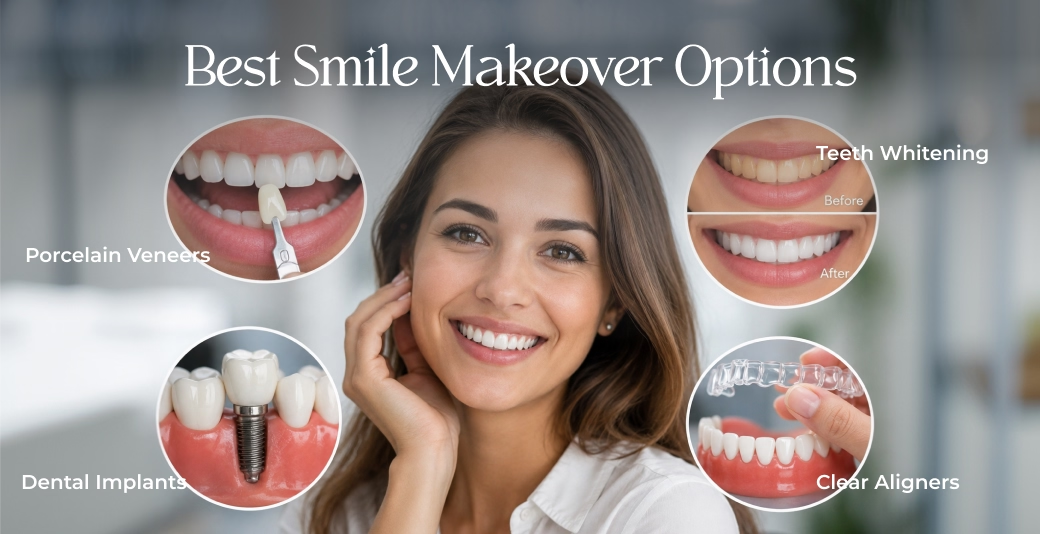
A smile makeover is a fully personalized treatment plan that combines cosmetic and restorative procedures, targeted to the exact concerns of the patient. You will find different smile makeover options, from whitening and veneers to aligners, crowns, implants, and bonding.
Read on to learn more about several smile makeover options with their details, how you can choose the right treatment for you, and everything related to the topic so you can leave this page with zero confusion.
Table of Contents
What Is A Smile Makeover?
A smile makeover is basically a complete cosmetic dentistry plan that is designed to transform the appearance of the teeth and redefine the smile.
This is not a single treatment plan to change the look of one’s smile. Rather, it is a combination of dental procedures to address multiple concerns at the same time. This includes color, shape, alignment, spacing, or missing teeth.
In most cases, people plan to get a smile makeover to improve the functionality of their teeth. Some want a better bite, while some demand easier chewing.
Different treatment procedures that target specific teeth concerns are utilized at dental clinics. The only goal is to enhance the smile’s appearance while making it more functional and youthful than before.
Top 6 Smile Makeover Treatment Options to Transform Your Look
Now we are going to add the details for each treatment plan with the advantages and considerations so that you can make an informed decision for yourself:
1. Teeth Whitening
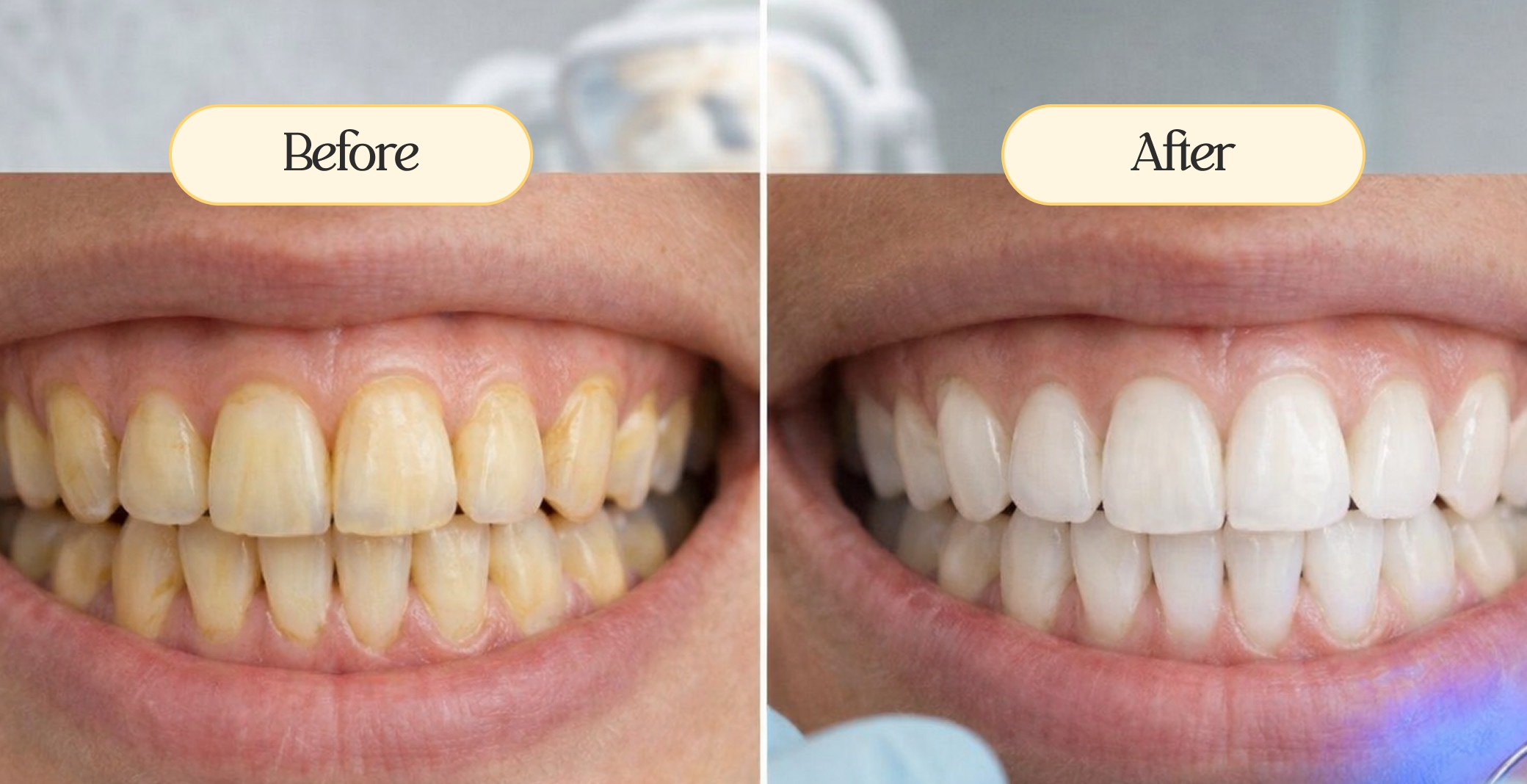
- Best for: Yellowed, stained, or discolored teeth
- Treatment time: 45–90 minutes (in-office)
- Downtime: No surgical downtime
- Results last: 6 months – 3 years, depending on diet and oral habits
- Cost range: $500–$1,000
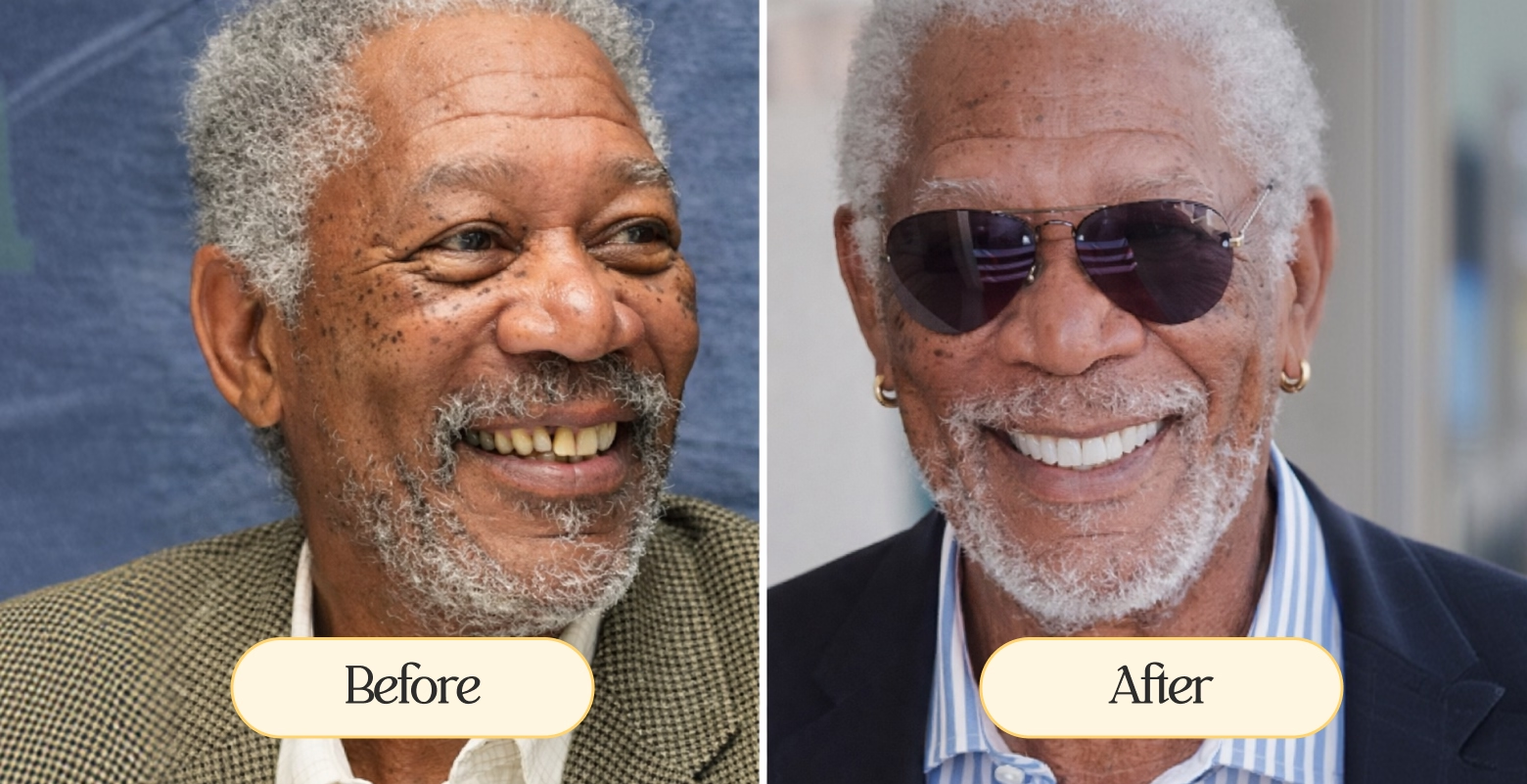
Teeth whitening is a popular cosmetic procedure that mainly helps brighten the color of teeth by reducing stains and discoloration. A specialized whitening agent, hydrogen peroxide or carbamide peroxide, are used here to break down stain molecules within the outer enamel.
However, a professional in-office treatment applies a higher-concentration bleaching agent. It is typically around 25–40% hydrogen peroxide.
| Benefits | Limitations to Consider |
| 1. Noticeably brighter teeth after one session 2. Non-invasive treatment without affecting the tooth structure 3. Shade can be adjusted based on your desired level 4. Quite safe when performed by a licensed dentist | 1. Bleaching agents often cause temporary sensitivity 2. Doesn’t whiten crowns, veneers, or fillings 3. Ineffective on gray or intrinsic staining |
2. Porcelain Veneers
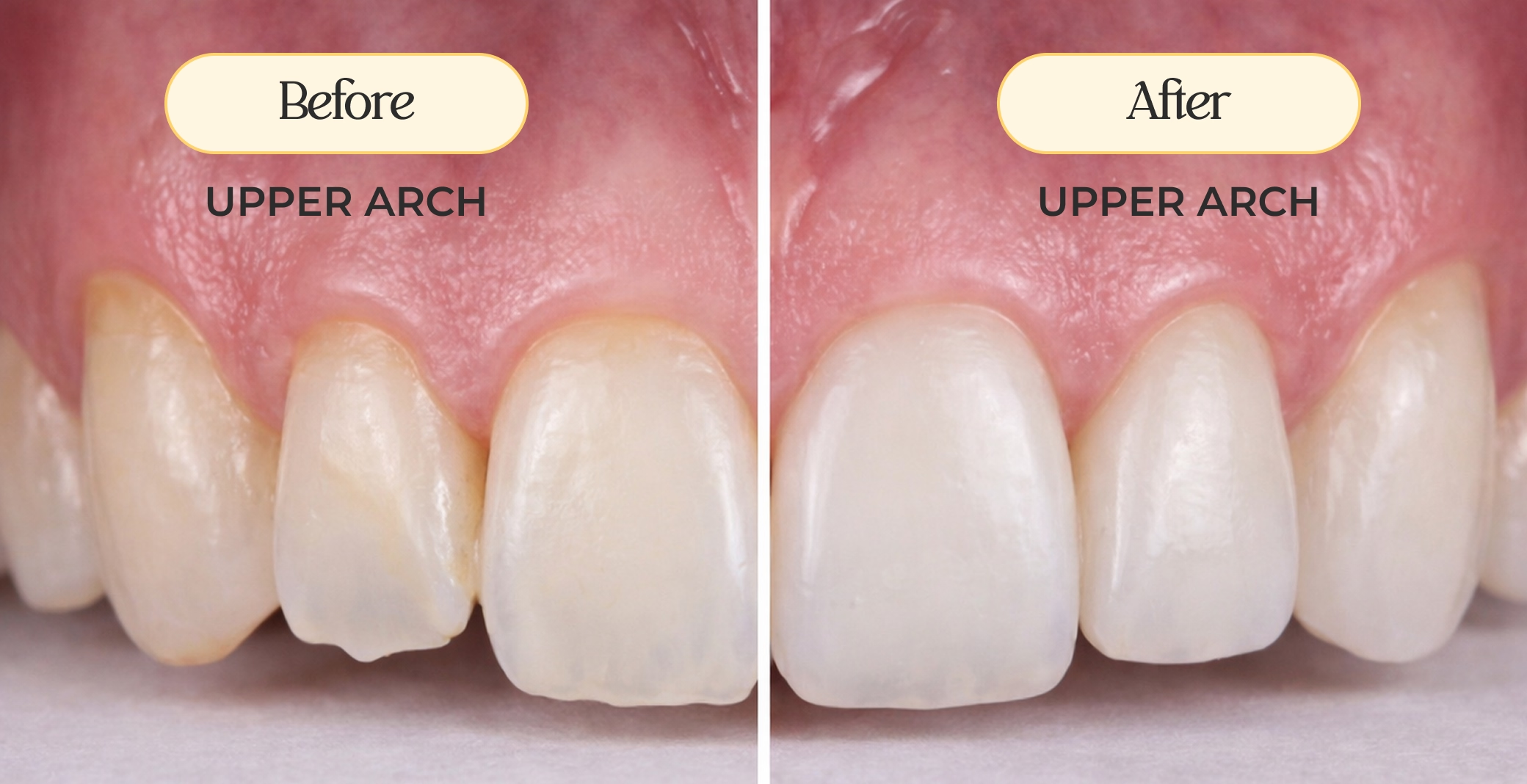
- Best for: Stained, chipped, gapped, or slightly misaligned teeth
- Treatment time: 2–3 appointments over 2–4 weeks
- Downtime: Minimal (Mild sensitivity for a few days)
- Results last: 10–20 years with proper care
- Cost range: $900–$2,500 per tooth
Porcelain veneers are basically thin, custom-made porcelain shells that are bonded to the front surface of the teeth. These 0.5–0.7 mm thick veneers basically improve the shape and color of the teeth.
To place veneers, dentists typically remove a small amount of enamel, about 0.5 to 0.7 mm, roughly the thickness of a fingernail. Because enamel doesn’t grow back, this step is permanent, which is why porcelain veneers are planned carefully around your goals.
This is one of the most popular smile makeover options that targets several cosmetic concerns at once, such as:
- Deep staining
- Chipped edges
- Small gaps
- Uneven tooth shape
- Mild alignment issues
| Benefits | Limitations to Consider |
| 1. Custom-shaped for natural-looking results 2. Minimally invasive compared to dental crowns 3. Long-lasting with proper oral hygiene 4. Corrects multiple cosmetic issues | 1. Cannot be placed on unhealthy teeth 2. Doesn’t fix severe misalignment or bite issues 3. A bit expensive |
3. Teeth Straightening
- Best for: Crooked, crowded, gapped, or mildly misaligned teeth
- Treatment time: 6–18 months, depending on complexity
- Downtime: None
- Results last: Permanent with consistent retainer use
- Cost range: $3,000–$6,000
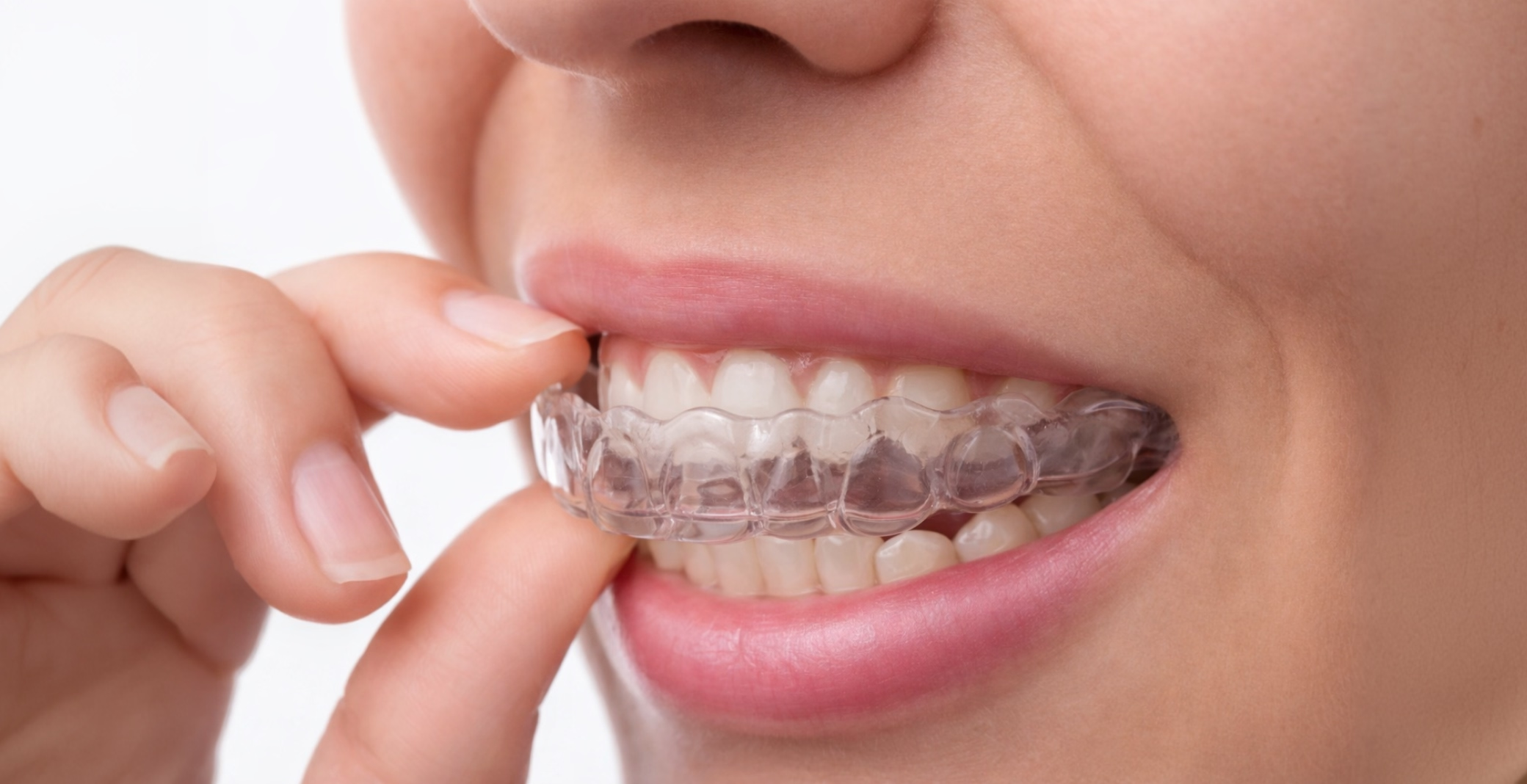
Teeth straightening with clear aligners is a popular smile makeover option. It uses a series of clear, custom-made trays to slowly move your teeth into a better position.
Our high-quality orthodontic aligners are made to fit comfortably over your teeth. Before starting, we check your teeth and bite to see if aligners are a good option for you.
One of the key advantages is that you can easily remove them whenever needed. That means you can eat normally and do regular brushing and even flossing. No restrictions right there!
| Benefits | Limitations to Consider |
| 1. Almost invisible during treatment 2. Removable for eating and oral hygiene 3. You don’t need dietary restrictions 4. Digitally planned for convenient teeth movement. | 1. Not suitable for severe bite or skeletal issues 2. Easily lost or damaged if mishandled |
4. Dental Crowns
- Best for: Severely cracked, weakened, or heavily discolored teeth
- Treatment time: 2 appointments over 2–3 weeks
- Downtime: Temporary sensitivity for a few days
- Results last: 10–15 years with proper care
- Cost range: $1,000–$1,800 per crown
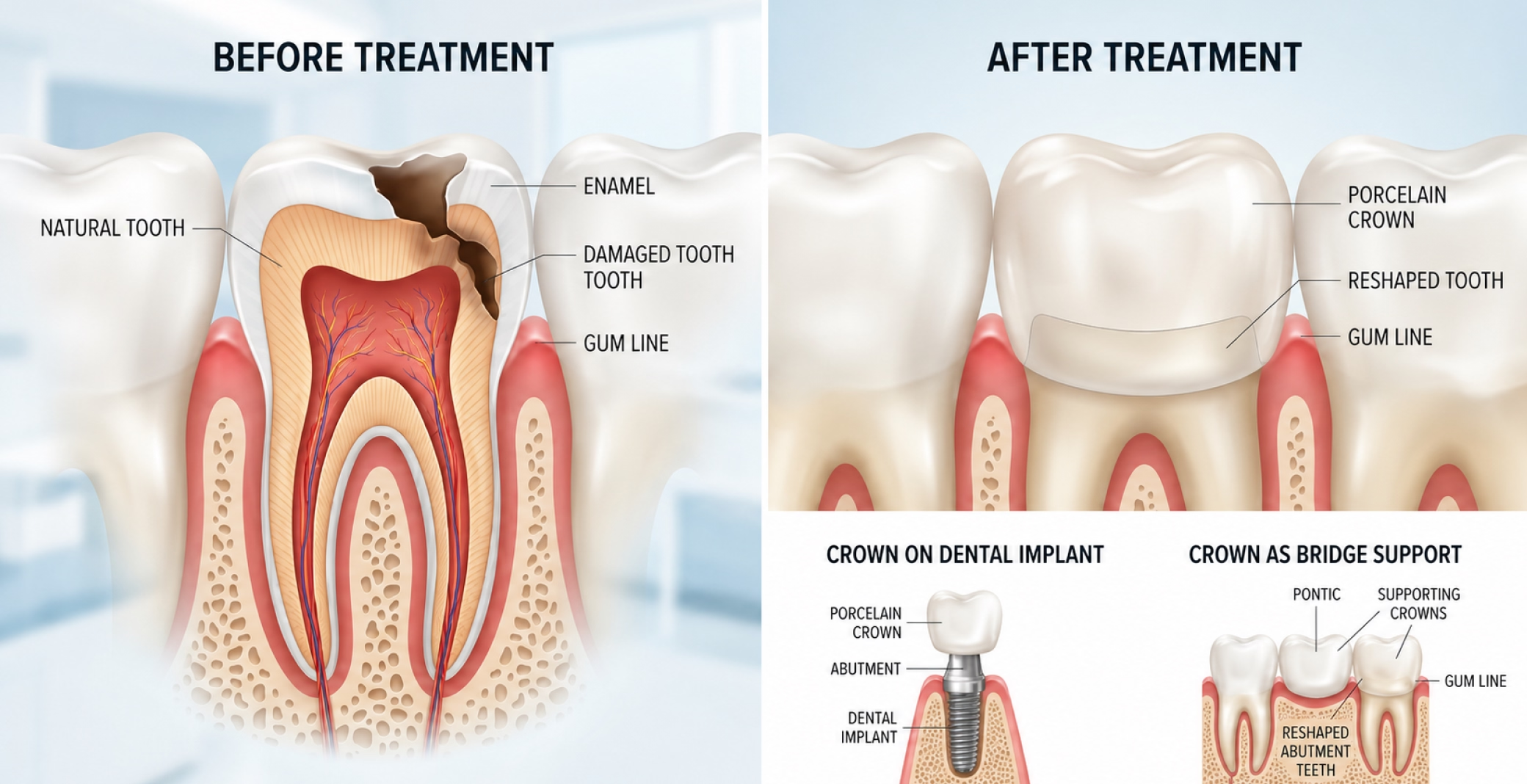
Dental crowns are custom-made caps that fit over damaged or weakened teeth. Made from materials like porcelain or zirconia, they cover and protect the visible part of the tooth above the gum line while restoring its strength and appearance.
Before placing a crown, dentists work on the natural tooth and remove a portion of its structure from the outside. This way, the crown fits perfectly, and you will get a natural tooth appearance.
| Benefits | Limitations to Consider |
| 1. Fully cover and protect a damaged tooth. 2. Restore normal biting strength 3. Porcelain material closely matches the color of the teeth 4. Can be used with implants and bridges | 1. More expensive than simpler treatments like fillings or bonding 2. Some temporary sensitivity is common after placement |
5. Dental Implants & Bridges
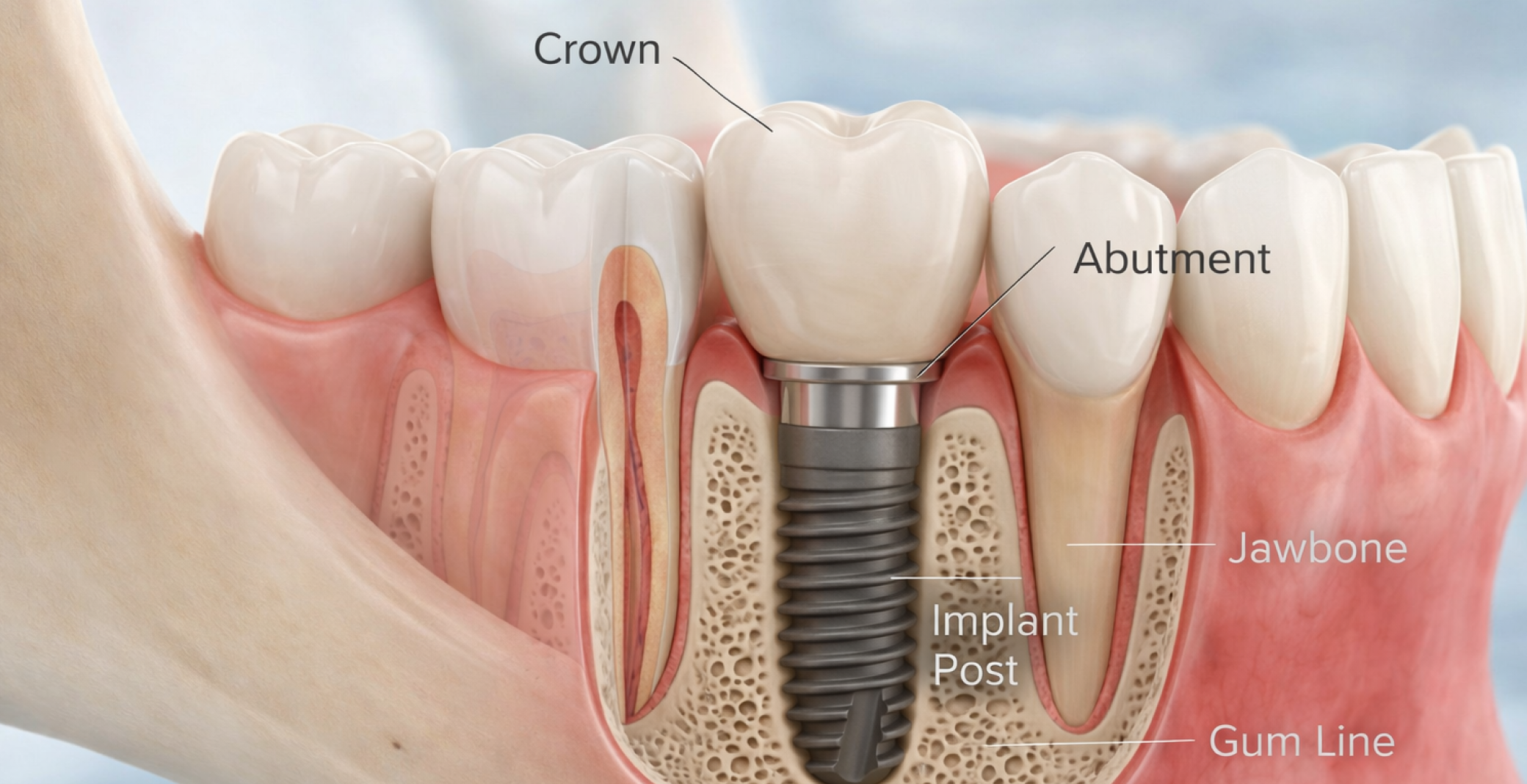
- Best for: One or more missing teeth requiring non-removable replacement
- Treatment time: 3–6 months total (For Implants) and 2–3 weeks (For Bridges)
- Downtime: Several days
- Results last: Implants (20+ years) Bridges (10–15 years)
- Cost range: $3,000–$5,000
Are you struggling with missing teeth and looking for a long-lasting solution? You may consider the most effective dental implant services or adding bridges. These are two reliable options you can utilize to replace missing teeth.
A dental implant basically involves placing a small titanium post into the jawbone through a surgical procedure. It creates a strong and stable foundation, giving you long-lasting results from the implant.
On the other hand, a dental bridge replaces a missing tooth by using the neighboring teeth for support. However, both treatment options are effective in restoring chewing function and appearance.
When choosing between them, we look at the patient’s teeth, gums, jawbone, and overall oral health. We also consider what they want from their treatment. This helps us recommend an option that fits their needs rather than using the same solution for everyone.
| Benefits | Limitations to Consider |
| 1. Dental bridges do not require surgery 2. They are fixed in place, so there is no need to move 3. Both options use custom-made crowns that fit with natural teeth. | 1. Smoking can greatly increase the risk of implant failure |
6. Dental Bonding
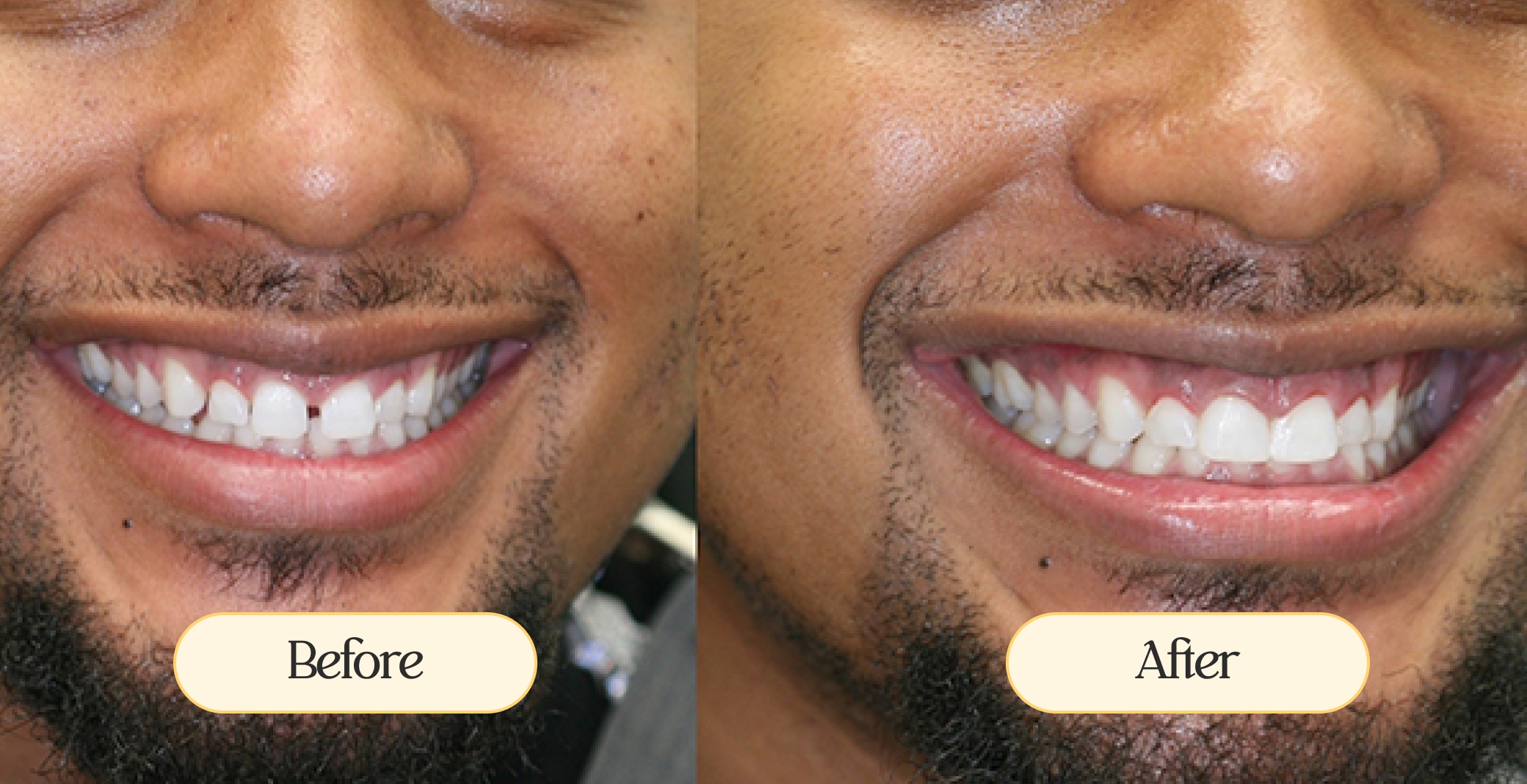
- Best for: Chipped, cracked, gapped teeth.
- Treatment time: 30–60 minutes per tooth
- Downtime: None
- Results last: 3–10 years, depending on oral habits
- Cost range: $200–$600 per tooth
Dental bonding is a simple but effective dental procedure that is popular for repairing or improving the appearance of teeth. In this process, a tooth-colored composite resin made from a blend of plastic and fine glass particles is directly applied to the tooth surface.
Before applying, dentists carefully match the resin shade to the natural shade of your teeth. Once in place, they use a special UV light to secure the material to the tooth. Even expert bonding services are offered based on treating different dental issues of the patient.
- Repairing chipped or cracked teeth
- Closing small gaps
- Covering stains or discoloration
- Or, often protecting exposed tooth roots
| Benefits | Limitations to Consider |
| 1. Can be completed in a single dental visit 2. One of the most affordable cosmetic dental treatments 3. Usually does not require removing much enamel | 1. Have a risk of a chip or break under heavy biting force 2. Not suitable for severely damaged teeth |
How to Choose the Right Smile Makeover Treatment for You
Consider these essential factors before you make the final decision on the right smile makeover option for you:
Identify Your Primary Concern
First, you have to identify what you actually want to improve. Is this discoloration, chips, gaps, misalignment, or missing teeth? Each problem mentioned here has a different solution.
For example, with whitening, you can improve staining, and bonding helps repair small chips. You must match the treatment with the current concern.
Consider Your Budget
Different smile makeover treatments in San Antonio are priced differently. You have to be quite strategic in your investment here, according to the teeth concern.
For instance, simple bonding may start around a few hundred dollars, but for implants, you must consider several thousand. Many dental clinics offer payment plans or membership options that make the burden even easier.
Factor In Your Timeline
No doubt, some treatments offer quick results, and for some, you need to wait longer. You just need to consider a time when you need that result. Whitening or bonding can often be completed in a single visit, but implants may require several months. If timing is a deciding factor for you, see how long a smile makeover takes for each treatment.
Assess Your Overall Oral Health First
Dental procedures perform best when they are done on a healthy foundation. If you have underlying issues like gum disease, decay, or root canal infection, all these need to be treated first.
According to the study, around 3.5 billion people are still affected by oral diseases worldwide. So first, you have to fully evaluate your teeth’s condition before making any decision.
Choose the Right Dental Professional
Still not sure which treatment is right for you or your budget? A consultation with an experienced dentist can help you understand your options. At Crystal Clear Dental, we start by listening to what you want to change and looking at the health of your teeth and gums.
We explain the treatment options that may work for you, along with the steps, expected timeline, and costs. This gives you a chance to ask questions and make a decision you feel comfortable with.
If you are thinking about a smile makeover, our right smile makeover advice can also help you prepare for your consultation.
Frequently Asked Questions
Is a smile makeover painful?
Not really! Most of the treatment plans are performed under local anesthesia, which makes the procedures painless. After the treatment, you might feel mild sensitivity or discomfort. Treatments like implants and crowns may involve a few days of mild soreness.
Does dental insurance cover smile makeover treatments?
Yes, some treatments like crowns, implants, and bridges might be covered depending on your insurance plan. However, cosmetic treatments like whitening and veneers are usually not covered. Crystal Clear Dental accepts most major insurers and also offers an in-house membership plan for uninsured patients.
Can I get multiple smile makeover treatments at the same time?
Yes, that is possible, and in some cases it helps achieve better results. For example, if you are planning veneers, the dentist may suggest preparing or strengthening the teeth first before starting treatment.
At what age can someone get a smile makeover?
It is generally recommended to consider a smile makeover after the age of 18. Teeth straightening with clear aligners can sometimes begin in the mid-teen years under orthodontic supervision.