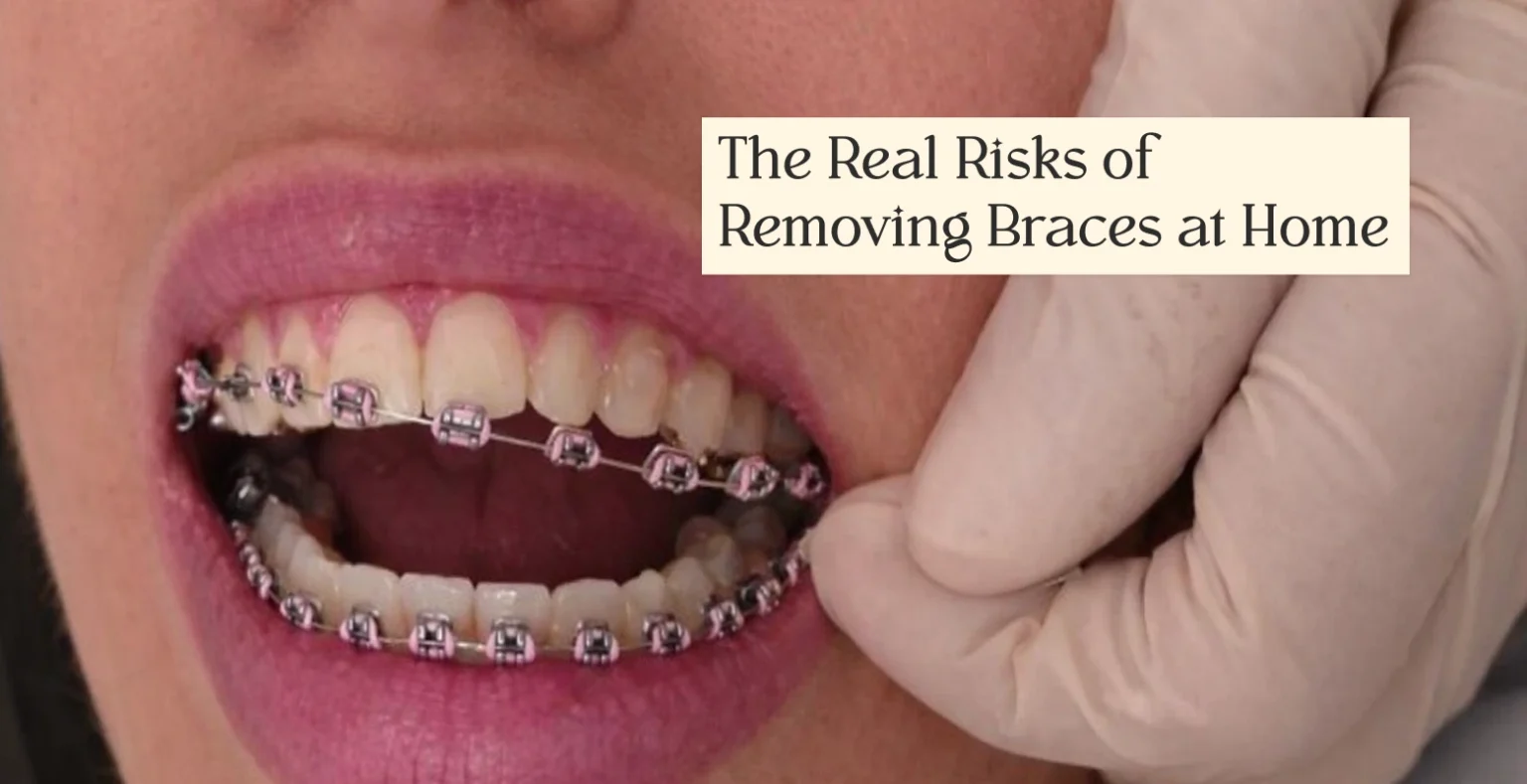
If you searched how to remove a brace at home, you probably saw those viral videos first. They look quick and funny. One pull and it’s done. But real life is not a reel. Braces hold tight for a reason. Pulling them the wrong way can hurt your teeth and gums.
In this blog, you will know why dentists matter, what really happens during safe brace removal, and why trends skip the painful part. You will also learn what damage can happen at home and how professionals protect your smile step by step. Views fade fast. Tooth damage does not.
Table of Contents
Is It Really Safe to Remove Braces at Home?
Removing braces at home may look quick and easy online, but it puts your teeth and gums at real risk. Strong dental glue, sharp wires, and uneven force can cause damage that only shows up later.
Removing braces is not just about pulling metal off teeth. Each step needs skill, tools, and checks. When people try it at home, many things can go wrong.
1. Permanent Enamel Damage
Brackets bond to enamel with strong dental glue. Dentists use special tools and angles to break this bond safely. At home, force causes chips, cracks, or rough spots on enamel. Enamel does not heal. Damage can lead to stains, sensitivity, and cavities later.
2. Gum and Soft-Tissue Injuries
Braces sit close to the gums, lips, and cheeks. Sharp tools or sudden pulling can tear soft tissue. Small cuts may bleed a lot and heal slowly. Open wounds raise the risk of infection, swelling, and ongoing pain.
3. Broken Brackets or Wires
DIY attempts often snap brackets or bend wires. Broken metal edges can scratch teeth, pierce gums, or get lodged between teeth. Loose pieces may be swallowed or inhaled, which can be dangerous and may need urgent care.
4. Bite Problems and Teeth Relapse
Braces come off in a planned order. Dentists check alignment as they remove them. If braces come off the wrong way, teeth can shift back fast. Your bite may feel uneven. Jaw pain, headaches, and chewing trouble can follow.
5. Missed Glue Removal and Polishing
After the brackets come off, the glue remains on the teeth. Dentists remove it carefully and polish the surface. At home, glue stays behind or gets scraped roughly. This leaves rough spots that trap food and plaque, raising decay risk.
6. No Final Dental Check
After removal, dentists check for cracks, weak spots, and early decay. They also assess gum health. Skipping this step means small problems stay hidden and grow worse over time.
7. No Retainer Planning
Teeth move after braces. Dentists fit retainers right away to hold results. Without one, teeth can shift within days. Months or years of treatment can undo quickly.
Short social media video trends show the “after” smile. They do not show the damage, pain, or cost later. Proper removal protects your teeth, your bite, and the time you already invested.
Professional vs DIY Braces Removal: One Protects Your Smile, One Puts It at Risk
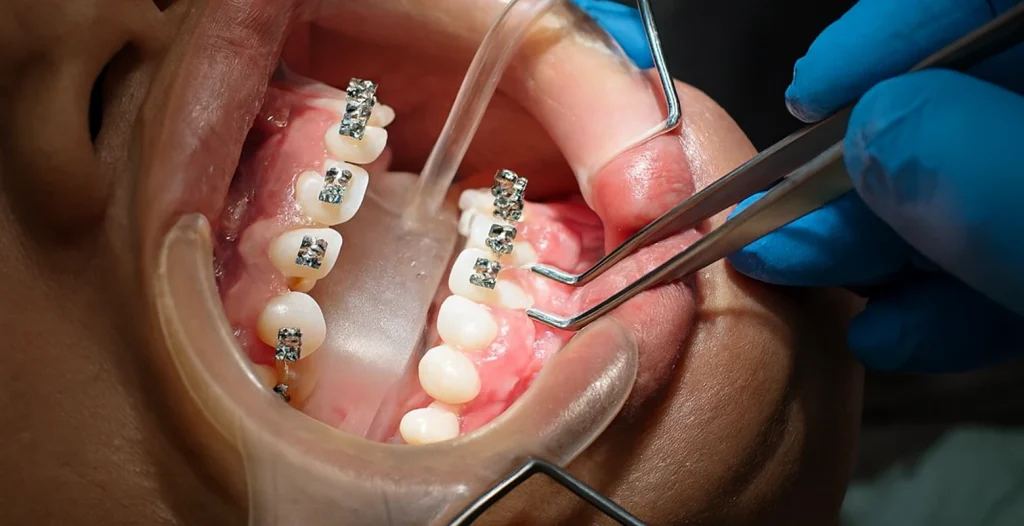
Professional braces removal takes place in a dental clinic with trained care and the right tools. A specialist removes wires and brackets using orthodontic pliers designed to release pressure without harming enamel.
They clean off the dental glue with a handpiece and carbide bur, then polish the teeth so they feel smooth and stay white. The specialist checks your gums, inspects each tooth for damage, reviews your bite, and fits a retainer to keep teeth from moving back.
DIY braces removal happens at home with tools like pliers, nail clippers, tweezers, or even spoons. These tools apply uneven force and pull at the wrong angle. Brackets twist instead of releasing. Enamel can chip or crack.
Wires can snap and poke gums or cheeks. Glue often stays behind or gets scraped roughly, leaving rough spots that trap plaque and cause stains. There is no bite check, no polishing, and no retainer planning.
Teeth can shift within days, and damage often appears later with pain and higher costs. One method finishes treatment safely. The other risks undo months of work in minutes.
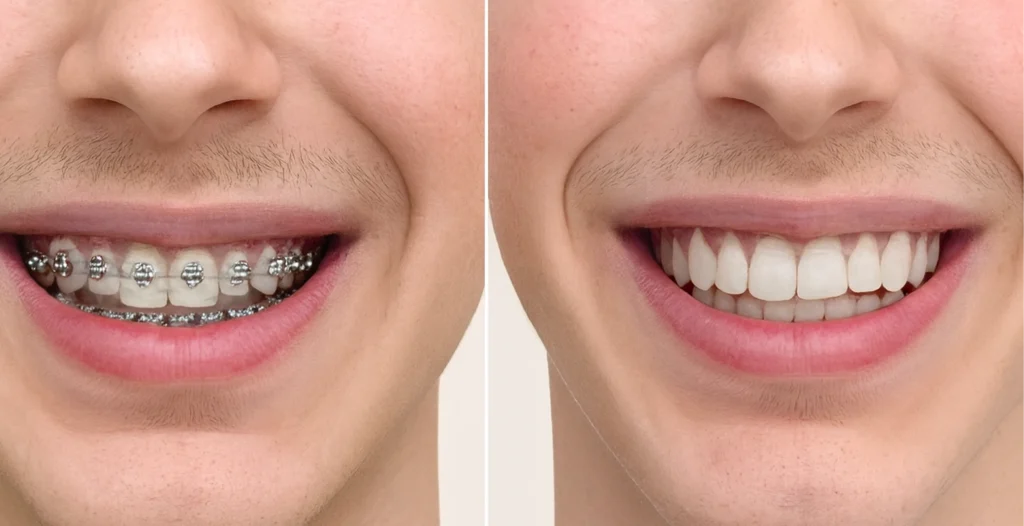
After Braces Removal: Professional After-Treatment Process (Step-by-Step)
Process 1: Adhesive (Glue) Removal & Enamel Protection
After braces come off, professionals start by cleaning the teeth properly. They use a low-speed dental handpiece with a tungsten carbide bur to remove bonding glue. This keeps the enamel smooth, protects white teeth, and lowers the risk of stains and toothache.
Process 2: Tooth Polishing for White Teeth
Next, the dentist polishes the teeth to restore a clean finish.
- Uses a rubber prophy cup and polishing paste
- Smooths the tooth surface after glue removal
- Helps bring back natural shine and white teeth
- Reduces plaque buildup and future staining
- Helps lower sensitivity after braces
Skipping polishing often leaves teeth dull and rough, which can lead to stains and discomfort.
Process 3: Pain and Sensitivity Check
Professionals then check for bracing pain and early toothache.
- Tests for sensitivity to pressure and temperature
- Checks for sore spots caused by long-term bracket pressure
- Identifies early enamel stress or irritation
- Addresses pain before it becomes a bigger issue
Home removal skips this check, so pain often starts days later.
Process 4: Gum and Soft-Tissue Examination
Gums take stress during braces treatment. Dentists check them carefully.
- Look for swelling, redness, or cuts
- Checks healing around bracket areas
- Guides on brushing and care to reduce gum pain
Healthy gums support strong, pain-free teeth.
Process 5: Bite and Alignment Check
After braces removal, the bite must feel right.
- Checks how the upper and lower teeth meet
- Identifies uneven pressure that may cause jaw pain
- Prevents chewing issues and future toothache
DIY removal never includes bite checks.
Process 6: Retainer Planning and Fitting
This step locks in the results.
- Measures teeth for a custom retainer
- Fits the retainer to stop teeth from shifting
- Explains when and how to wear it
- Prevents relapse and pain caused by moving teeth
Without a retainer, teeth can shift within days.
Now you’ve seen the difference. Pros use precision and care. DIY uses hope and household tools, and hope is not dental care.This does not happen safely at home. That’s why braces removal is not a DIY job. When it’s time to remove your braces, skip the tricks and visit your orthodontist.
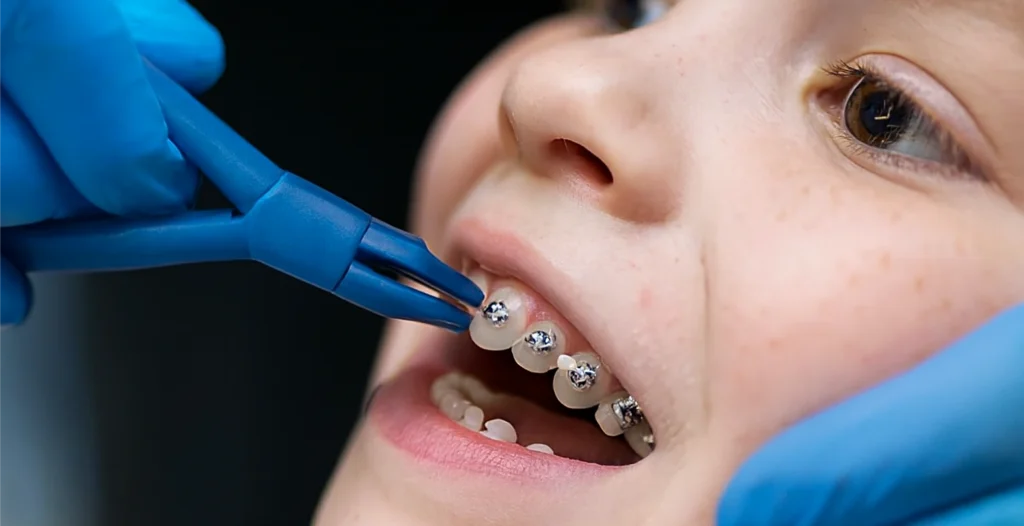
Braces Removal Cost for Kids and Adults: Full Cost Breakdown
Braces removal cost depends on how your treatment started and what care you need at the end. For most people, removal happens at the orthodontist’s office and includes more than just taking brackets off.
If Braces Were Done by the Same Orthodontist
For both adult and kids treatment cost plans, brace removal usually costs $200 to $300. In many cases, the braces treatment cost is already included in the full braces treatment plan. This often covers:
- Removing wires and brackets
- Cleaning leftover glue
- Final bite check
- One retainer or retainer plan
Parents and adults usually do not pay extra if they have completed treatment with the same provider.
If You Switch Orthodontists or Stop Early
If braces removal happens at a different clinic, the cost can rise to $300 to $500. This happens for both kids and adults when:
- Treatment started somewhere else
- Braces need early removal
- Records or treatment plans are missing
Retainer Cost (After Braces)
Retainers usually cost extra for both kids and adults:
- $100 to $300 per retainer
- Clear retainers may cost more than wire retainers
Retainers matter because teeth can shift fast after removal.
Extra Costs That May Apply
Some patients need extra care after braces:
- Deep glue cleanup: $50–$150
- Tooth polishing or stain removal: $50–$200
- Fixing enamel damage from DIY attempts: $200+
Why Professional Removal Saves Money
Trying to remove braces at home may seem cheaper, but damage often leads to higher costs later. Cracked enamel, toothache, or gum injury can cost far more than safe removal.
For kids and adults, visiting your orthodontist for braces removal protects your teeth, your comfort, and your wallet.
Conclusion
Do not try to remove braces at home. Social media videos do not show the damage, pain, or cost that can follow. Home tools can crack enamel, cut gums, and cause a toothache. Teeth can shift fast and undo months of treatment.
Professionals use the right tools. They protect white teeth. They reduce braces pain. They check your bite. They fit retainers and keep results stable. This care keeps your smile healthy and strong.
If you need help or have questions about braces removal, contact us. We are here to guide you the right way.